Large Circular Yoga Mat Comparison: Nonslip Grip & Support[6][15]
By Aiko Tanaka • 21st Sep
![Large Circular Yoga Mat Comparison: Nonslip Grip & Support[6][15]](/images/article/thumbnail/49cb1db8-f902-4a77-a8ea-e56ec2659117.avif)
Quick verdict
Knsbk lists a carrying bag, explicit care directions, and a moisture-absorption claim. nuveti may suit low-sweat floor work, but its listing warns that the suede surface can become more slippery as sweat increases.
- Choose Knsbk if: You want the listed carrying bag and prefer its stated moisture-absorption design and specific cleaning instructions.
- Choose nuveti if: You prioritize its listed 0.7 kg weight and expect mostly low-sweat stretching or meditation, while accepting the moisture-related grip qualification.
- Main trade-off: Both are listed as round, approximately 140 cm by 3.5 mm mats, so dimensions do not decide the comparison. The key difference is that nuveti explicitly qualifies its anti-skid claim when sweat increases.
Important: Both listings describe natural-rubber components, which may contain latex. Neither product has collected independent testing for wet grip, cushioning, stability, durability, or material safety.
A large yoga mat can make a home practice feel less constrained, but this circular yoga mat comparison has an important limit: the two mats examined here share nearly the same listed dimensions, while their grip and support claims have not been independently tested. For anyone buying around sweaty vinyasa, floor traction, and reliable footing (not just a pretty meditation corner), that distinction matters.
The Knsbk Large Round Yoga Mat and nuveti Large Meditation Mat are both listed at roughly 140 cm (55 in) in diameter and 3.5 mm thick. That gives us a useful side-by-side on stated construction, carrying details, and care guidance. It does not justify declaring one universally safer, grippier, softer, or more durable.
The short answer: which circular mat fits which need?
Choose Knsbk if: a supplied carrying bag and a listing that specifically says its faux-suede top absorbs sweat or water are meaningful to you. Its listed care directions are also clear: spot-clean with cold water and mild detergent, dry flat, and keep it out of direct sun.
The Knsbk is listed as a round, 4.6-foot/140 cm mat at 3.5 mm, with natural rubber and a faux-suede surface. The manufacturer listing says its rubber underside is slip resistant and that the top absorbs sweat or water. Those are useful design claims, but not proof of wet-grip performance in a heated class.
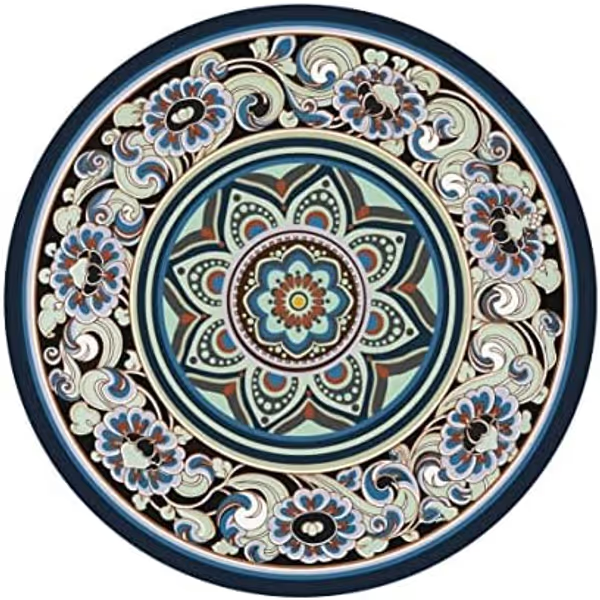
Knsbk Large Round Yoga Mat
Spacious, eco-friendly mat for versatile, non-slip practice and meditation.
Size4.6' Diameter (Extra Large Round)
Size4.6' Diameter (Extra Large Round)
Pros
Ultra-large round design for unrestricted movement
Double-sided non-slip for all floor types and sweat levels
Eco-friendly natural rubber and faux suede for durability
Cons
3.5mm thickness may lack cushioning for some intense poses
Large size may be less portable for some users
Customers love its aesthetic, comfort for meditation/workouts, and easy cleaning, though some desire more yoga cushioning.
Customers love its aesthetic, comfort for meditation/workouts, and easy cleaning, though some desire more yoga cushioning.
Choose nuveti only after taking its moisture note seriously: its listing calls both sides anti-skid, yet it also says the suede surface becomes more slippery as sweat increases and suggests spraying water on it before use. That is not a small footnote for hot-yoga practitioners; it is the decision point.
For quiet, low-sweat floor work or a seated meditation mat setup, either round format may be appealing on paper. For fast, sweat-heavy practice, neither listing supplies the evidence I would want before treating it as a proven non slip mat yoga solution.
Field heat is the truth serum for mat grip.
That lesson stays with me from one packed August class when the air conditioning quit and humidity turned the room hazy. A light travel mat began moving under a simple twist; the heavier backup held through the wet floor. A mat does not need to feel luxurious before class. It needs to stay predictable when conditions stop being polite.
What is actually the same?
Footprint and thickness
These are close on stated size:
| Specification | Knsbk Large Round Yoga Mat | nuveti Large Meditation Mat |
|---|---|---|
| Shape | Round | Round |
| Listed diameter | 4.6 ft / 140 cm | 140 cm / 55 in |
| Listed thickness | 3.5 mm | 3.5 mm |
| Listed rubber component | Natural rubber construction, according to listing | Natural rubber underside, according to listing |
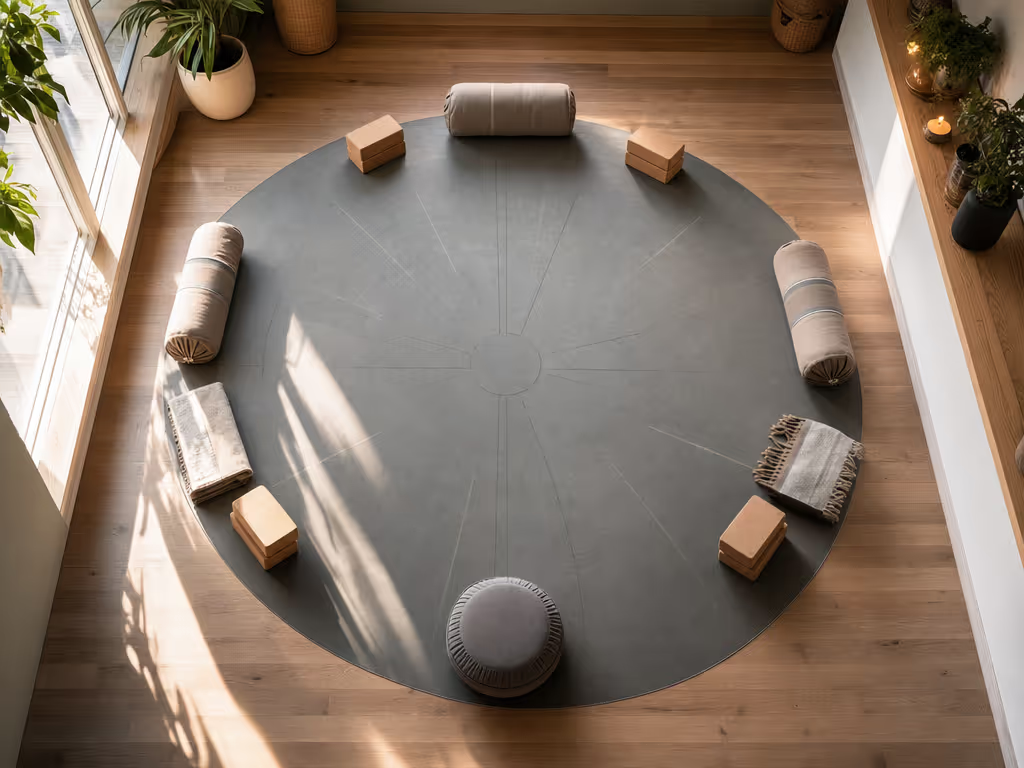
A 140 cm circle is a different proposition from a conventional long rectangle, and our guide to practicing 360° flows on a round mat explains how to use that extra space intentionally. It can suit a centered home setup, seated practice, general stretching, or floor mobility where you change direction close to the middle. But a circle does not automatically create more usable room for every pose. Your actual usable space depends on where hands, feet, knees, and head land (not merely on the advertised diameter).
The two mats are also both listed at 3.5 mm, so thickness will not separate them. More importantly, thickness alone does not tell you whether a mat will feel supportive or stable. Density and construction influence whether material resists compression or feels like it bottoms out. A mat can be thicker and still feel less steady than a firmer, thinner option.
Rubber requires an allergy check
Both listings describe natural-rubber components. Natural-rubber mats may contain latex, so they are not an appropriate default for someone with a latex allergy; readers with allergies or chemical sensitivities can also consult our guide to non-toxic yoga mats. Neither listing establishes latex testing, a latex-free status, or allergen certification. If that is part of your purchasing decision, do not fill in the missing information from marketing language (ask the seller or choose a material with documentation that meets your needs).
Where the listings diverge: carry details, surface claims, and uncertainty
Knsbk: sweat-absorption claim plus carrying bag
Knsbk lists a natural-rubber mat with a faux-suede surface and says a carrying bag is included. If the mat will travel between a home shelf and class, a bag is a real convenience rather than a decorative extra (particularly with a round format that may not fit the habits you have built around a standard yoga-mat strap).
Its listing further says the top surface absorbs sweat or water "instantly" and the underside is slip resistant. I would treat that as a reason to inspect and test the mat after arrival, not as a guarantee. There is no collected independent wet-grip, dry-grip, floor-adhesion, or dry-down testing for this model, so our explanation of the science behind yoga mat surface texture provides useful context without substituting for product-specific testing. Nor is there evidence here on odor, edge curl, long-term wear, or how well it handles back-to-back studio cleaning.
The care instructions are at least specific: spot-clean with cold water and mild detergent, dry it flat, and avoid direct sun. Follow those listed instructions rather than experimenting with aggressive cleaners on a suede-like surface.
nuveti: a listed 0.7 kg weight, but a crucial sweat qualification
The nuveti Large Meditation Mat is listed as rubber with natural rubber on the underside and a suede surface. It is also listed at 0.7 kg. That may matter to commuters, but it is a retailer-listed figure, not an independently measured carry test; packed size and real-world rollability are not established here.
nuveti Large Meditation Mat
Dual non-slip, eco-friendly mat for stable meditation and versatile use.
Diameter140CM (55 inch)
Diameter140CM (55 inch)
Pros
Superior double-sided non-slip design for safety
Natural rubber ensures eco-friendliness and comfort
Lightweight, portable, and multi-purpose functionality
Cons
Thinner cushion (3.5mm) may not suit all yoga practices
Round shape may be less versatile for linear movements
The more consequential detail is the listing's internal tension. It markets a double-sided anti-skid design, then says its suede surface gets more slippery as you sweat and recommends spraying water on it before practice to improve slip resistance. The listing may be describing a surface that responds differently once damp, but no independent testing was collected to show when that transition happens, how much moisture it takes, or whether hands and feet behave the same way.
For a low-sweat stretching session, that ambiguity may be manageable if you can test it safely at home. For power flow, hot yoga, or any practice where a hand slide changes your load path, it is a reason to be conservative. Start with stable, low-risk positions. If your hand squeaks, skates, or needs repeated readjustment, stop treating the setup as dependable.
FAQ: Grip, support, and oversized-mat decisions
Is either one the best oversized yoga mat?
Not on the available evidence. These are like-sized circular mats with different listing details: Knsbk includes a carrying bag and claims moisture absorption; nuveti lists a 0.7 kg weight but also warns that more sweat can make its suede top slipperier. Neither has independent performance testing here, so a best-overall verdict would be invented.
How much thickness is best for a yoga mat?
There is no universally best thickness. Both mats here are listed at 3.5 mm, but our yoga mat thickness guide explains why thickness alone cannot determine support or stability. Support depends on more than thickness: density and construction affect stability and compression. Match the feel to your practice, then test kneeling and standing positions separately. A surface that feels cushioned in tabletop can still feel unstable in balance work.
Is a thicker mat always better for joints and stability?
No. Thickness alone does not establish support, and cushioning is a separate performance dimension from traction. If steadiness in standing work is your priority, evaluate whether the mat compresses under your foot (not just whether it feels plush when you press it with a hand).
What material should I avoid in a yoga mat?
The evidence supports one clear conditional answer: avoid natural-rubber components if you have a latex allergy. Both products here describe natural-rubber components, and neither listing provides latex-content testing or a latex-free certification. Beyond that, a blanket avoid list would be too broad; material choice depends on your allergy needs, sweat level, texture preferences, and the care instructions you can realistically follow.
Where can I find an oversized exercise mat?
These two approximately 140 cm circular options are identified through their retailer listings, but availability can change. Confirm the current listing details, return terms, and the exact product variant before ordering. For any wide fitness mat purchase, measure the open floor area first (especially if you practice near furniture, radiators, or door swings).
A practical at-home acceptance test
A circular mat can look calm and spacious in a room yet reveal its limits under movement. Before committing to it, use a short, repeatable test on the exact floor where you will practice:
- Check the floor side. Place the mat on clean, dry flooring, and use this yoga mat floor-compatibility guide to understand how wood, tile, carpet, and concrete can affect stability. Step near the center, then near the perimeter. Notice any shifting before you add movement.
- Check dry hand and foot contact. Use a low lunge, downward-facing position, and a slow transition. Listen for sliding or a tacky squeak; either is useful information.
- Check the edge zone. Put a hand or foot where you naturally reach when you lengthen. A round outline can bring the edge closer than expected in certain directions.
- Test support under load. Spend 20-30 seconds kneeling, then stand and slowly shift weight. Observe compression and rebound rather than deciding from one quick press.
- If you sweat, introduce only a small, controlled amount of moisture. Do not test a new surface by launching straight into fast flow or inversions. The goal is to learn whether grip changes before you rely on it.
- Clean as directed and let it dry flat. With Knsbk, the listing specifies cold water, mild detergent for spot cleaning, flat drying, and no direct sun. For nuveti, rely on its current seller instructions rather than assuming the same routine.
This is not a laboratory protocol, but it is safer than discovering the surface behavior mid-practice. Tested soaked, trusted dry is a standard worth earning rather than assuming.
Final verdict
This comparison ends in a qualified split, not a podium finish. Both the Knsbk and nuveti are listed as approximately 140 cm circular mats at 3.5 mm, so choose them for the round footprint and your layout (not because one has documented superiority in support or grip).
Knsbk lists a carrying bag, a stated sweat-absorption design, and explicit cleaning directions. nuveti warrants caution for sweat-heavy users because its own listing says the suede surface may become more slippery as perspiration increases, despite its broader anti-skid claims.
If dependable traction in heat is non-negotiable, keep the bar high: verify return terms, test on your actual floor, and do not mistake a product label for wet-grip evidence. The right large yoga mat is the one that stays quiet, stable, and mentally invisible when the room gets hot and the practice gets demanding.
Related Articles