How to Choose a Travel Friendly Yoga Mat for Backpacking
By Sofia Álvarez • 2nd Sep

What to do
Choose a backpacking yoga mat by comparing verified packed dimensions, weight, open size, and thickness with your pack plan—not by chasing the lowest weight. Keep it dry before packing, and treat it as practice gear rather than sleeping insulation.
- Start with: Record folded or rolled dimensions, open dimensions, and weight for each candidate.
- Then: Review listed thickness and seek exact-model observations for expected surfaces, then check the exact mat’s cleaning and drying requirements.
- Important prerequisite: Carry an appropriate insulated sleeping pad separately. The available evidence does not give yoga mats an R-value or support using one as a replacement.
Important: There is no independent comparative testing here for backpacking durability, wet grip, external attachment, or a universally best model. TSA policies may change, and airline baggage rules were not collected here.
A travel friendly yoga mat for backpacking has to earn every ounce: it should fit your pack plan, give you a usable practice surface, and avoid becoming damp, awkward gear you resent carrying. The lightest travel yoga mat is not automatically the right choice, because weight alone does not establish packed shape or field comfort. For backpacking, context beats absolutism: choose from the numbers you can verify, then use exact-model observations when considering the terrain you expect.
This guide does not name a universal "best" mat. There is no standardized backpacking test here for wet grip, abrasion, punctures, or long-term field durability. But you can make a sound decision by comparing dimensions, weight, thickness, care requirements, and packing format.
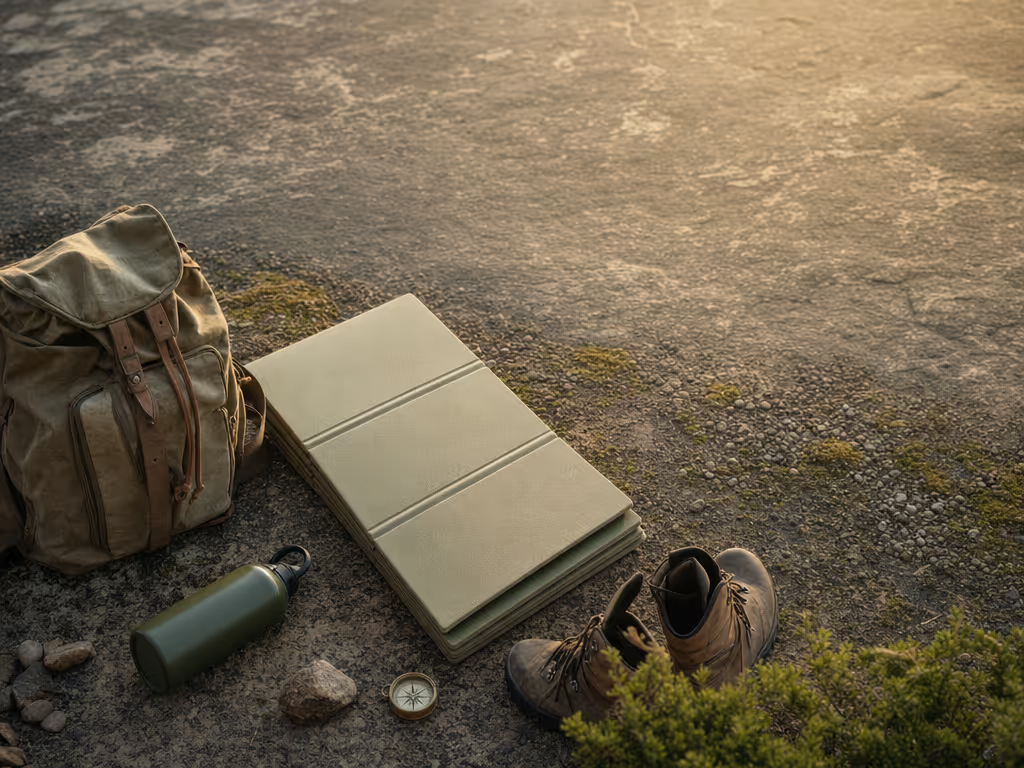
FAQ: What matters most in a backpacking yoga mat?
Start with packed volume, not just weight
Weight is easy to compare, but it is only one part of the carry problem. Record these four specifications for each candidate:
- Listed weight in pounds or grams.
- Listed open length and width.
- Thickness in millimeters (mm).
- Packed dimensions - especially for a folding mat.
A mat can be light yet still form an inconvenient cylinder inside a small pack, so compare lightweight travel yoga mats that grip by both packed shape and carry weight. A foldable design may be easier to place against a back panel or within a packing cube, even when its total weight is not the lowest option.
In Yogo’s manufacturer listing retrieved September 2, 2026, the Ultralight Foldable Travel Yoga Mat was listed at 2.3 lb and 1.7 mm, with open dimensions of 24 × 68 inches and folded dimensions of 12 × 2 × 4.5 inches. Check those specifications again before purchase, as product listings can change.
Those listed dimensions provide concrete figures for side-by-side comparisons; the folded size can also be compared with your pack interior.
A 2022 publisher review that disclosed affiliate links and a trial mat supplied to the reviewer reported a YOGO Ultralight at 2.1 lb and 1.5 mm, with open dimensions of 24 × 68 inches and folded dimensions of 12 × 2 × 4.5 inches. The review does not establish that its reviewed mat is equivalent to the current manufacturer-listed version, so verify current specifications before purchase.
How do open mat dimensions compare?
Do not let the word "travel" persuade you to overlook open dimensions. In manufacturer listings retrieved September 2, 2026, Yogo listed its Ultralight Foldable Travel Yoga Mat at 24 × 68 inches, while Manduka listed the standard eKO Travel Superlite Yoga Mat 1.5mm and PRO Travel Yoga Mat 2mm at 24 × 71 inches. The available information does not establish body- or pose-specific minimum dimensions, so treat these measurements as product specifications rather than fit guarantees.
When comparing candidates, record exact open dimensions alongside weight, thickness, and packed format rather than assuming that every travel mat has the same surface area.
Is a thinner mat always better for backpacking?
No conclusion follows from thickness alone. Listed yoga mat thickness is a useful comparison specification, but the available evidence does not establish a universal relationship between thinness and comfort on hard ground.
A reviewer who tried a Yogo mat in 2022 described it as very thin and used a folded shirt or towel under the knees on hard surfaces. That is one person's experience with one reviewed mat, not a universal verdict about thin mats.
For that reviewed mat, a folded shirt or towel was the reviewer’s solution on hard surfaces. Treat it as a product-specific observation to investigate, not proof that every thin mat needs the same setup.
FAQ: Which travel-mat format suits a backpack?
Foldable mats: most predictable for internal packing
A folding mat gives you a stated packed shape to work with. Compare that shape with the usable interior of your pack and the other items that must stay dry and accessible. The goal is not merely to make the mat fit; it is to make it fit without forcing food, insulation layers, or rain protection into poor positions.
In Yogo’s manufacturer listing retrieved September 2, 2026, the Ultralight Foldable Travel Yoga Mat was listed as folding to 12 × 2 × 4.5 inches. In that listing, Yogo also said the mat’s attached straps let it be packed, carried, or clipped to a backpack. Verify these details before purchase. The straps are a product-specific design feature, not evidence that every yoga mat should be lashed to the outside of a pack.
There is a tempting but faulty comparison here: closed-cell foam sleeping pads may be carried externally and can double as camp sit pads. That guidance applies to sleeping pads, not yoga mats. It does not establish external carry as equally secure, weather-resistant, or snag-resistant for a yoga mat.
Thin travel mats: compare the complete dimensions
Some thin travel options provide a little more length without necessarily becoming low-weight leaders. In a manufacturer listing retrieved September 2, 2026, Manduka listed the standard eKO Travel Superlite Yoga Mat 1.5mm at 24 × 71 inches and 2 lb. It listed the standard PRO Travel Yoga Mat 2mm at 24 × 71 inches and 2.9 lb.
Those figures illustrate why there is no single "lightest" answer worth chasing in isolation. The 2 lb option is lighter in the listed specifications; the 2.9 lb option has a stated 2 mm thickness. Neither specification tells you everything about how it will feel on your chosen ground, how it will wear on trail, or how it will perform in sweat.
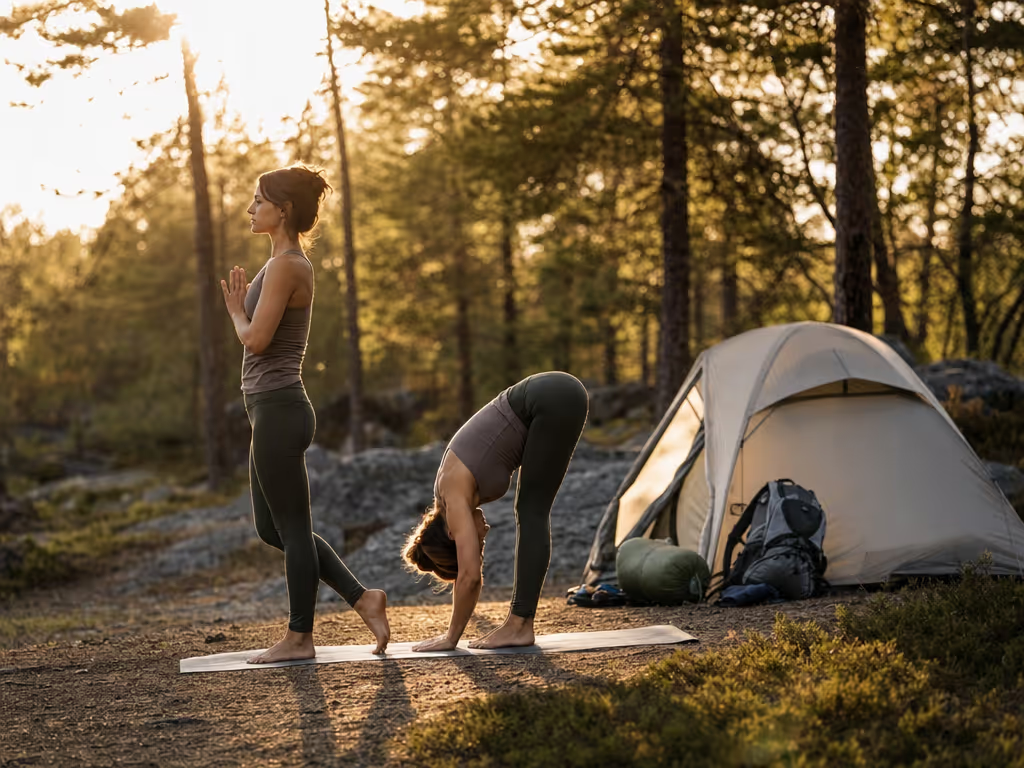
Outdoor-oriented yoga rugs: a distinct option
A yoga rug is not simply a yoga mat with a different name. In a manufacturer listing retrieved September 2, 2026, Manduka identified its Shala Travel Yoga Rug as a cotton yoga rug designed for outdoor practice and said it could adapt to sand, grass, or uneven terrain. That is the manufacturer's positioning for this specific product, rather than a performance finding that extends to all outdoor practice surfaces.
If your priority is practicing on variable natural ground, an outdoor-oriented rug may be worth investigating alongside foldable mats. For more guidance on outdoor yoga mats, compare the maker's stated intended surfaces, care instructions, and packed dimensions for the exact version you are considering.
FAQ: How should I carry and care for a yoga mat on a trip?
Keep it dry before it goes into the pack
The simplest care rule is also the most important for a backpack: allow the mat to become completely moisture-free before storing it. Do not put it in a dryer.
If you practice near water, in humidity, or after a sweaty session, give drying time a place in your itinerary. Packing a wet mat inside a closed pack is not a small organizational issue; it can interfere with the rest of your packing system. Before using any cleaning product or washing method, check the specific mat's care instructions, since brands may discourage particular solutions or methods; this natural rubber mat cleaning guide can help you avoid damaging grip or shortening the mat's life.
Closed-cell construction can matter here, but verify that construction for the exact mat. Closed-cell yoga mats are generally described as thinner and water-resistant, meaning they do not absorb liquid as quickly. That characteristic should not be assumed merely from a material name or a travel label.
What about odor, materials, and sourcing?
Backpacking asks more of a mat than a studio shelf does: it may spend long periods folded in a confined pack, then be opened close to your sleeping and cooking space. If low odor, volatile organic compounds (VOCs), or material traceability matter to you, look for product-specific materials information and review the mat’s care requirements.
For example, in its manufacturer listing retrieved September 2, 2026, Yogo listed FSC-certified natural tree rubber plus recycled straps and a label for its Ultralight Foldable Travel Yoga Mat. That identifies the manufacturer's stated materials at that time, but it is not an emissions test or a guarantee about odor. If a mat's odor is unacceptable when you first unroll it, practical caution means airing it out and reviewing the maker's information before treating it as camp gear.
FAQ: Can a yoga mat replace a sleeping pad?
No. A yoga mat and a sleeping pad solve different problems. Sleeping pads are designed to provide both cushioning and insulation. Their R-value measures resistance to heat flow; higher R-values provide more insulation from cold surfaces. The available information does not give yoga mats R-values or support using one as a substitute for an insulated sleeping pad.
Bring a sleeping system appropriate to the expected conditions. Treat the yoga mat as practice equipment, not as a shortcut in your overnight safety margin.
FAQ: Can you bring a yoga mat through TSA?
In U.S. TSA guidance retrieved September 2, 2026, a generally permitted item can still receive additional screening or be barred if it triggers an alarm, appears tampered with, or raises another security concern. Under that guidance, the final decision rests with the TSA officer. Verify TSA guidance before travel, as policies can change.
The available guidance does not provide a yoga-mat-specific carry-on entry, and it does not answer airline size or cabin-baggage rules. Check the airline's current allowance before you travel and leave time for screening rather than relying on an unqualified yes.
A practical backpacking selection checklist
Before committing, write down the answer to each question:
- Will it fit inside my pack at its listed folded or rolled size?
- What exact open dimensions are listed?
- What thickness is listed, and is there exact-model information about comfort on the surfaces I expect?
- Do the manufacturer's care instructions work with my trip's drying time and hygiene needs?
- Am I counting on external attachment without product-specific support? If so, reconsider the packing plan.
- Am I confusing a yoga mat with an insulated sleeping pad? Keep those roles separate.
- Does the material documentation meet my own odor, VOC, and sourcing standards? If the information is absent, acknowledge that uncertainty rather than filling it with marketing assumptions.
A travel mat may be worth bringing when its listed packed size, weight, and care requirements fit your packing plan and you have recorded its open dimensions and thickness without assuming those figures guarantee fit or comfort. Continue your research by comparing current specifications for a few likely candidates against your actual pack dimensions. For expected practice surfaces, look for exact-model observations rather than extending one mat's review to every thin mat. That small, data-led exercise will tell you more than a generic "best mat" list ever could.
Related Articles