Yoga Mat Performance: Short vs Long Practice
By Aiko Tanaka • 19th Feb
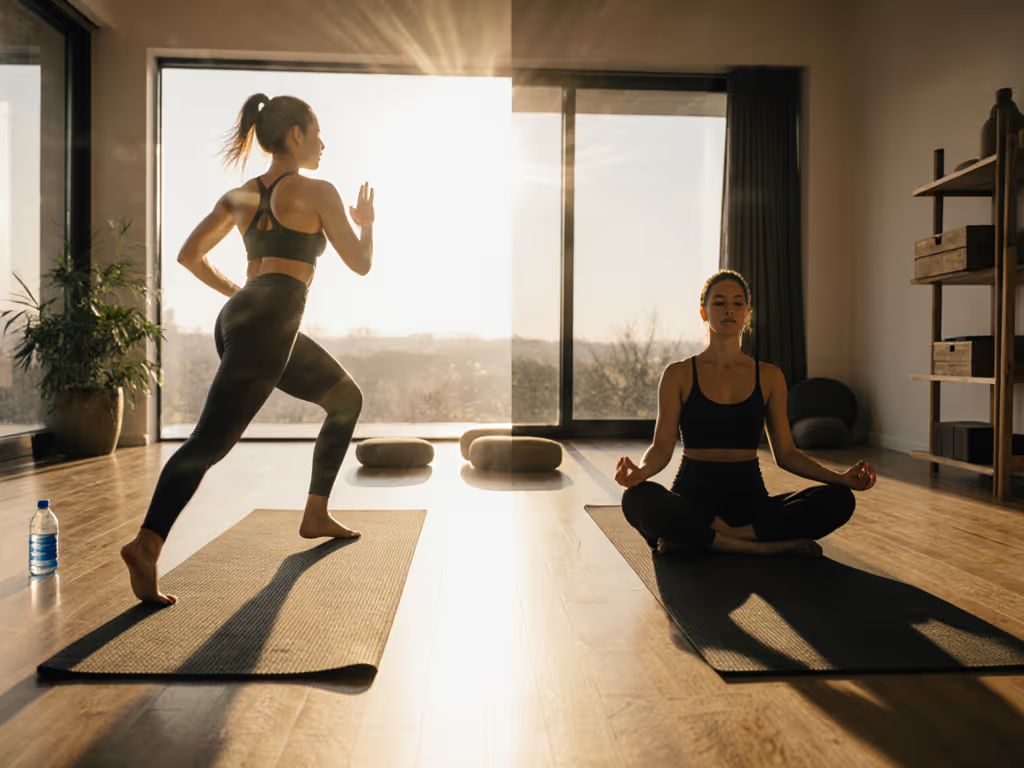
The choice between a mat optimized for short, intense sessions versus one built for extended, slower practices isn't just about comfort, it's about biomechanics, grip reliability under sweat, and whether your mat supports or sabotages your rhythm. As someone who rotates through teaching multiple back-to-back hot classes, testing each mat through puddles and transitions, the stakes become clear fast. Yoga mat duration performance depends less on the mat itself than on matching its design to how long you'll be moving on it.
What Does "Short" vs "Long" Practice Actually Mean?
When we talk about practice duration, we're really discussing movement patterns and load time. A short practice (typically 30 to 45 minutes) usually means higher intensity: vinyasa flows, power sequences, Ashtanga primary series, or hot yoga where you're transitioning constantly. Your mat experiences rapid weight shifts, directional changes, and sustained sweating. If heat and sweat are your norm, see our verified non-slip hot yoga mats tested to grip when soaked.
A long practice (60 to 90+ minutes) often includes slower tempos: restorative, yin, prenatal, or leisurely hatha classes. You hold poses longer, rest more, but the total sweat load and grip demand operate differently. The mat sits under your bones for extended periods rather than absorbing impact from transitions.[1][5]
Yet duration alone doesn't dictate mat choice. A short vs long practice mat selection also hinges on intensity, room temperature, and your body's sweat profile. Someone in a 45-minute heated vinyasa may demand more grip performance than someone in a 90-minute room-temperature yin class, even though yin lasts longer.
Does Thickness Matter Differently for Short vs Long Sessions?
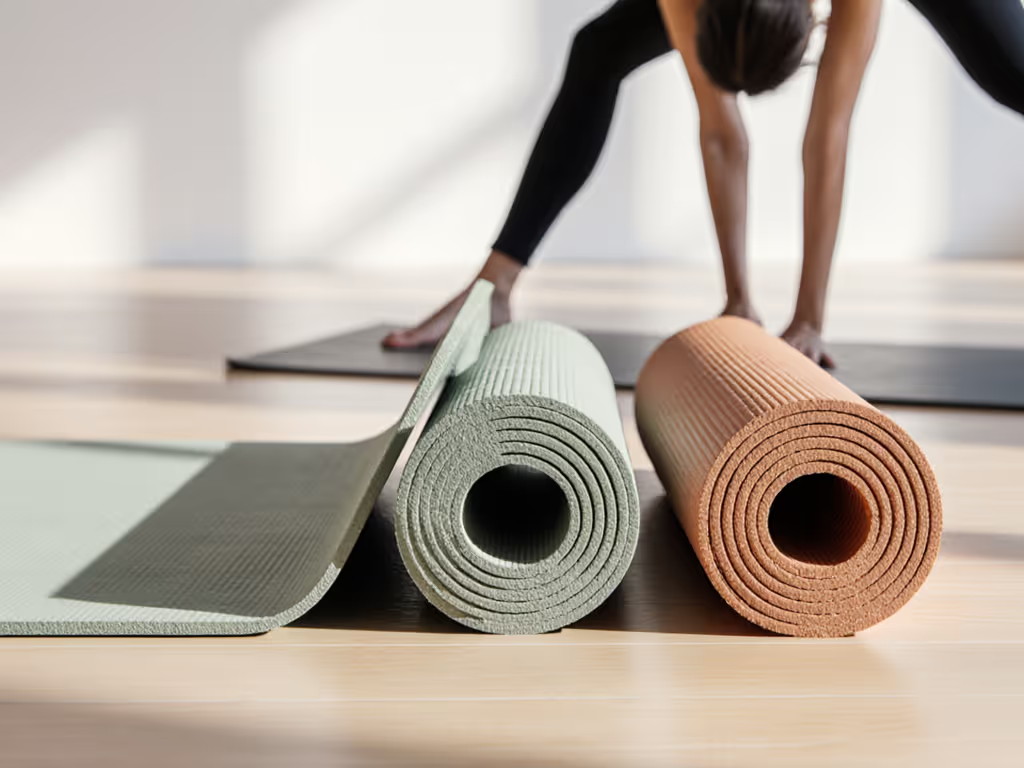
Yes, measurably so. Thin mats (3 to 4 mm) excel during short, dynamic practices because they maintain proprioception and ground feel.[2][5] Your feet stay closer to the floor, giving you feedback during standing balances and jump-backs. During a packed August class where the AC failed and the room fogged, my lighter travel mat (a thin, portable option) slid during a simple twist. That single failure taught me what studio heat demands: when intensity is high and duration is compressed, instability becomes unsafe.
Thicker mats (5 to 6 mm) are engineered for longer holds.[1][2] If you're in savasana for 10 minutes or holding a deep pigeon pose for 5 minutes, cushioning prevents your hip bones from protesting. For practice length mat selection, this is decisive: a long, slow practice forgives cushioning because you're not relying on ground feedback for balance transitions.
But here's the field-tested nuance: a medium-thickness mat (4 mm) bridges both worlds reasonably well, offering sufficient cushioning without sacrificing stability.[8] It's not optimized for either extreme, but it performs adequately for most mixed-style practitioners.
How Does Sweat Load Affect Mat Grip Across Practice Lengths?
Field heat is the truth serum for mat grip. In short, intense sessions, sweat accumulates rapidly and grip is tested within minutes. Within a 45-minute hot vinyasa, your hands may slip if the mat's top layer doesn't have the right texture-to-material ratio. I've tested dozens of mats through soaked hands in sun salutations, and the ones that hold are those with high-friction rubber compounds or textured surfaces designed specifically for wet conditions.
Longer, slower practices present a different challenge. Sweat pools rather than splashes. If you're in restorative yoga in a heated room, the mat sits under a growing layer of moisture for 90 minutes. The grip doesn't need explosive traction, but it needs consistent, non-slip security, so you don't shift during a supported backbend.[2]
Critically, mat material matters here more than duration. A natural rubber mat with microtexture outperforms a basic PVC mat for both short and long sessions, but for different reasons: rubber grips wet faster; PVC requires textured surfaces to compensate.[6] If sweat is heavy, even a long, gentle practice demands mat grip designed for humidity and moisture, not just cushioning.
Does a Longer Mat (in Length/Width) Change Performance Needs?
A large yoga mat (extending 80+ inches for taller practitioners or widened to 36 inches for broader bodies) doesn't inherently perform better or worse; it simply fits more of your body on the surface.[4] But length and width do interact with practice style:
During short, dynamic practices, a longer mat gives you runway for jump-backs and forward folds without your hands or feet spilling off the edge. Taller or broader practitioners can compare extra-wide 36-inch mats built to support larger frames without edge spill. This is safety and confidence, not performance per se. A tall yogi in a 45-minute ashtanga series will feel grounded knowing the mat extends fully beneath them.
During long, stationary practices, a larger mat provides psychological spaciousness and comfort. You can shift your body during a 10-minute hold without sliding toward the edge, and wider mats prevent you from feeling cramped if you're broad-shouldered.[4]
However, larger mats are heavier and bulkier.[1][2] If you're commuting to a studio daily or teaching multiple classes, portability becomes a real constraint. I've made the trade-off many times: on teaching days with back-to-back classes, I use a standard-length, standard-width mat that I can roll and carry on transit without fatigue. At home, where I practice longer, restorative sessions solo, I use a larger mat because weight and transport are non-issues.
Which Mat Works Best for 30 to 45 Minute High-Heat Sessions?
For a quick practice yoga surface under heat, prioritize grip and stability over cushioning. A thin to medium mat (3 to 4.5 mm) with a rubber or natural-rubber top layer that's textured or micro-dimpled will outperform a thick, smooth PVC mat.[1][2][5] The reasoning: you're moving fast, sweating hard, and relying on ground feedback for balance. Cushioning would actually undermine your stability in warrior III or half-moon, and thick mats absorb energy during transitions, requiring you to work harder.[1]
Material specificity matters acutely here. If hot yoga or heated vinyasa is your primary practice, mat grip under wet conditions is non-negotiable. Natural rubber, TPE (thermoplastic elastomer) blends, or PVC with a textured, professional-grade surface all perform, but each has trade-offs. Natural rubber offers the most consistent wet grip but can off-gas and may trigger latex sensitivities. TPE blends balance grip and low toxicity. PVC requires the right top layer texture to compete.
For this duration and intensity, weight and portability are secondary. Tested soaked, trusted dry, a mat that holds under worst-case conditions frees your mind to focus on alignment and breath, not whether your hands will slip.
What About Mats Designed for 60 to 90+ Minute Sessions?
For longer practices, especially yin and restorative styles, cushioning and surface comfort become the primary performance metrics. A yoga mat thick enough to absorb pressure on bones (5 to 6 mm) reduces strain on knees, wrists, and hips during extended holds.[1][2][5]
The catch: balance in standing poses becomes harder on very thick, soft mats. If your long practice includes standing sequences (as many hatha and slower vinyasa classes do), you may sacrifice stability for cushioning. A medium-thick mat (4.5 to 5 mm) with firm density balances both demands.[8]
Grip is less critical during slow flows because you're not transitioning rapidly and your weight is distributed more statically. A softer, less textured surface (like cork or natural rubber without aggressive micro-texturing) can suffice if the mat's density and material prevent slipping from pressure and humidity alone.
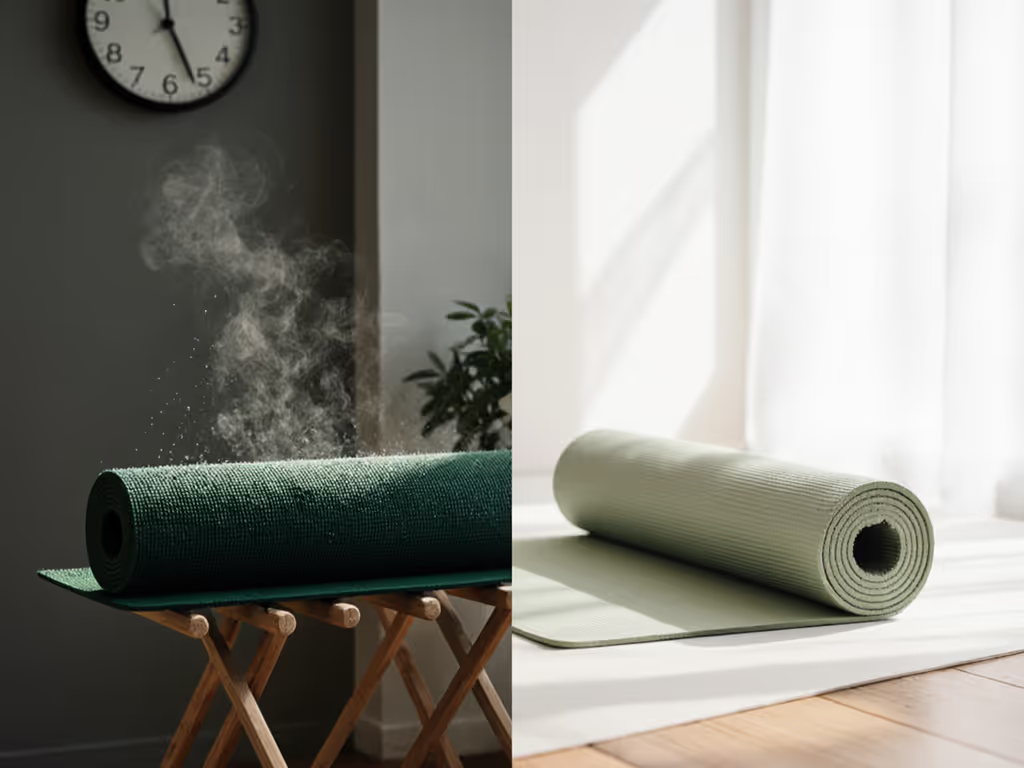
Drying time and storage matter more here. To speed up post-class care and prevent musty odors, consider dedicated mat drying racks tailored to your material and space. Thicker mats hold moisture longer after class, and they're bulkier to store in small spaces. If you practice at home and wash your mat regularly, account for 24 to 48 hours of drying time for a 6 mm mat versus 6 to 12 hours for a 3 mm mat.[1]
How Does Room Temperature and Humidity Factor In?
Mat performance isn't static across conditions. A mat that grips beautifully in a cool, dry room may feel slick in a heated studio with 60% humidity. Conversely, a mat that performs in hot yoga may feel sluggish and less responsive in a cool room-temperature class.
For short, hot practices, your mat must be engineered for sweat and heat durability. Material choice here is critical: rubber compounds and TPE blends handle heat and humidity better than PVC, which can become sticky or off-gas more under prolonged heat.[6]
For long practices in variable climates, a mat with stable grip across temperature and humidity ranges is worth the premium. You're on it longer, so its responsiveness matters throughout the entire session. Natural rubber, once properly broken in, maintains consistent grip regardless of room conditions.[1][6]
What's the Real Cost Trade-Off: Portability vs Durability for Different Durations?
A lighter mat (often thinner, sometimes made from TPE or PVC) is easier to carry and suits commuters teaching or practicing multiple short sessions daily. To gauge long-term value for your practice frequency, use our cost-per-use guide. But thinness correlates with faster compression and surface degradation.[1] If you're on a 2 to 3 mm mat daily, expect 6 to 12 months of heavy use before top-layer peeling or loss of grip.
Heavier, thicker mats (usually natural rubber or high-density TPE) are more durable (often 2 to 3 years of consistent use), but they're harder to transport. The trade-off is rational for home practitioners and those doing fewer short sessions. For someone splitting time between studio and home, owning two mats (a lightweight one for studio commute, a high-performance one for home practice) is often the practical solution.
Yet durability and performance aren't always linked to weight. A medium-weight, medium-thickness mat made from quality natural rubber or pro-grade TPE can last years while remaining portable. The real variable is material integrity, not bulk.
Final Verdict: Match Mat to Duration and Intensity, Not Duration Alone
The relationship between yoga mat duration performance and mat selection is bidirectional. A short practice doesn't automatically demand a thin mat; a long practice doesn't guarantee you need cushioning. Instead, ask:
- How intense is your movement? High-intensity, dynamic flows (regardless of length) need grip and proprioceptive feedback, prioritize thin to medium thickness, textured surfaces, and sweat-resistant materials.
- How much sweat? Hot yoga, heated vinyasa, or power flows generate rapid moisture. Choose natural rubber, TPE, or textured PVC that maintains grip when soaked. Test on a wet surface before buying.
- How long do you hold poses? Extended holds (yin, restorative, meditation) benefit from cushioning. Medium to thick mats (4.5 to 6 mm) reduce joint pressure.
- Are you carrying it daily? Studio commuters need portability; home practitioners can afford heavier, more durable options.
- What's your body and your floor? Tall or broad bodies need larger mats; hard floors (tile, hardwood) require better cushioning than carpet.
No single mat excels at everything. But when you match thickness, material, size, and grip to both your practice duration and its intensity, you eliminate the friction that compromises focus. A mat that holds in the worst class (heat, sweat, fatigue, crowded studios) frees your mind to practice without fear or distraction. That's the performance that matters most.
Related Articles