Thin Yoga Mats for Deep Relaxation: Comfort vs Stability Guide
By Aiko Tanaka • 11th Mar
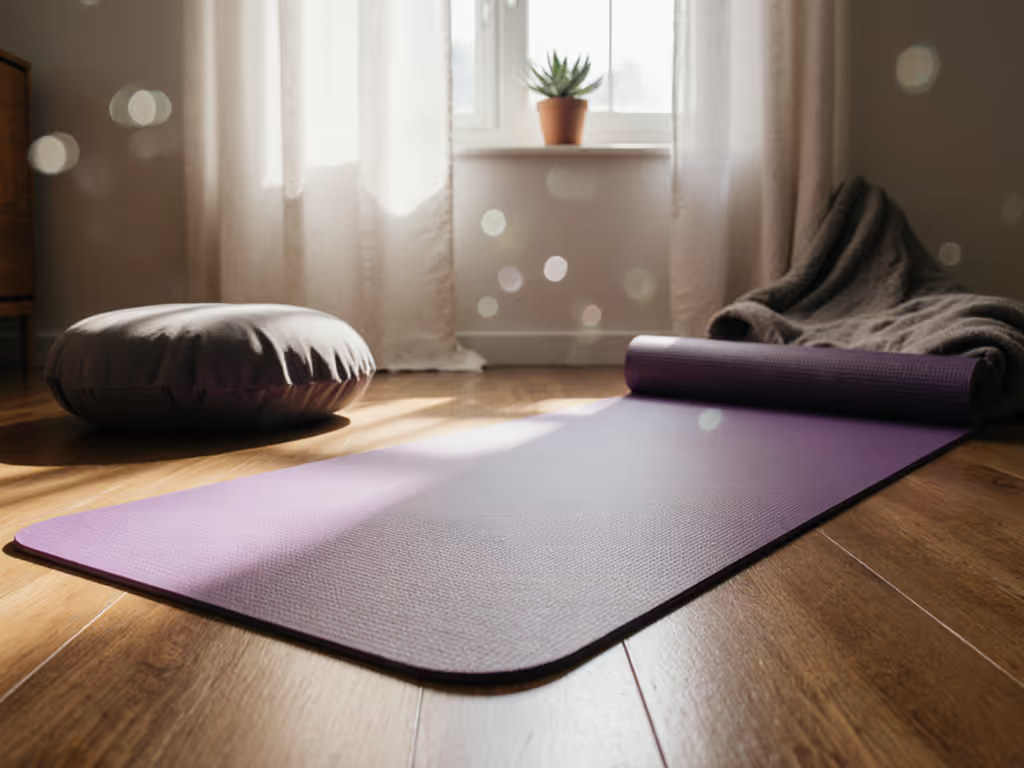
A thin yoga mat sits at the heart of a fundamental trade-off: the cushioning your joints crave versus the stability your practice demands. For deep relaxation practices (yin, restorative, and slower vinyasas), a thin yoga mat promises stillness and grounding, yet the wrong thickness leaves you sore or unanchored. This guide breaks down that tension with field-tested specifics and sensory notes to help you choose confidently.
The Core Tension: Why Thin Mats Excel (and Where They Don't)
Thin yoga mats typically range from 1 to 5 millimeters thick, and this slenderness serves a purpose. Thinner mats provide superior stability, your foundation feels firm and grounding, which is exactly what deep relaxation postures demand. When you settle into a long-hold restorative twist or child's pose, a thin mat won't compress unpredictably beneath you; you stay anchored. For practices built on prolonged stillness, that predictability matters more than plushness.
Yet the trade-off is real. Thinner mats offer minimal cushioning, and kneeling or extended floor work (cow-cat stretches, reclined poses on hard flooring) can leave your wrists, knees, and elbows protesting. This becomes critical if your practice space is tile, hardwood, or concrete. For floor-specific recommendations, see our mat-floor compatibility guide.
Field heat is the truth serum for mat grip, and so is pressure-point time in stillness.
FAQ: Answering Your Deepest Concerns
What Thickness Should I Choose for Relaxation-Focused Practice?
For deep relaxation, aim for 3 to 5 millimeters. This range strikes the most reliable balance between stability and joint protection. A 3 mm mat will feel grounding and minimal, ideal if you value an almost barefoot connection to the earth beneath you. A 4 to 5 mm mat adds enough spring for wrist and knee relief during longer holds without sacrificing balance during gentle transitions.
Sub-3 mm travel mats (1-2 mm) are too thin for relaxation work; they're designed for portability, and your joints will remind you of the compromise. Mats thicker than 6 mm introduce what testers call "squish," making it harder to find a stable base in any pose, especially if you're moving between positions. For a deeper breakdown of thickness pros and cons across styles, read our thickness trade-offs guide.
Does Material Matter More Than Thickness?
Absolutely, and materials interact with thickness in real ways. Compare PVC, natural rubber, and TPE to see how material choice affects grip, durability, and feel. A natural rubber mat at 5 mm will perform differently than a TPE (thermoplastic elastomer) mat at the same thickness: the density of the material, its grip behavior when warmed by body heat, and how it responds to moisture all shift the equation.
Natural rubber mats (like those made from tapped rubber trees) are denser and more resilient. They grip better in sweat and hold up over years of use, but they're heavier and some people react to the odor. A natural rubber mat at 4 mm can feel like a 5 mm TPE mat in terms of support, because the material itself is more robust.
PU (polyurethane) and TPE mats are lighter and often cheaper, but the top layer can compress with time, especially if you practice on the same spot daily.
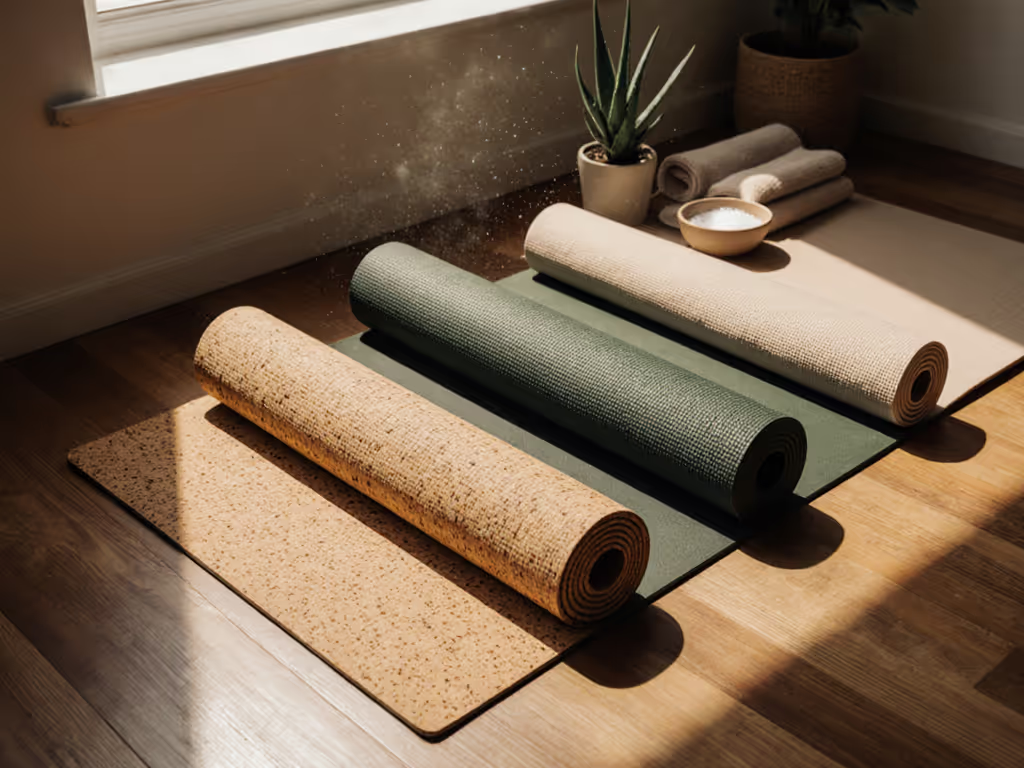
Cork-surfaced mats (with foam beneath) offer impressive grip naturally and appeal to minimalists who want firmness plus a bit of cushion. That 6 mm specification often includes a 3 mm foam layer under cork, so you get structure without too much squish.
Will a Thin Mat Provide Enough Yoga Mat Pressure Point Relief?
Yes, if you're strategic. A 4-5 mm mat blocks enough shock for gentle holds. The key is how the material responds under sustained pressure: does it spring back, or does it compress and stay flat?
During deep relaxation, you're not jumping; you're lying still or in static folds. In that context, a 4 mm mat with good spring (like open-cell foam constructions) often delivers more relief than a 6 mm dense mat that offers no rebound. The rebound itself protects joints by distributing your weight more evenly over time.
For floor-intensive practices (prone savasana on carpet, reclined goddess pose), consider folding a blanket under sensitive areas. Joints adapt better to micro-adjustments than to fighting a mat that's simply too thin.
What About Grip During Sweat or Heat?
This is where material and surface texture dominate thickness. A thin mat with poor grip is a liability; a thin mat with excellent grip is gold.
Search-tested mats show that some surfaces become grippier when moistened, and the smooth side becomes stickier as sweat or humidity accumulates. Others, like certain TPE surfaces, lose grip when wet. For relaxation-focused practice in a heated room, test the mat's behavior in that specific condition. Many studios offer short trials; use them. If heat and sweat are constants, start with our verified non-slip hot yoga mats tested to grip when wet.
Natural rubber and cork excel here. Jade Harmony mats (natural rubber, 5 mm) are noted for grip so strong that they also attract dust. That's how sticky they are. The Yoloha Unity (cork with foam, 6 mm) requires a break-in period but then offers impressive traction.
Do I Need to Sacrifice Portability with Thin Mats?
Not entirely. A 3-4 mm mat is already lighter than a 6-7 mm mat, but weight also depends on material. Open-cell foam mats (like Manduka eKO, 5 mm) are lighter and springy while still offering cushion. Natural rubber mats at 5 mm are heavier (about 5-6 pounds) but still manageable for transit if you have a carrier strap.
If true portability is essential, choose a 1-2 mm travel mat for commute days and keep a 4-5 mm mat at home or in your studio. Studio chaos, simple choices: don't force one mat to do everything.
How Do Thin Mats Hold Up Over Time?
Durability depends on material, care, and how often you practice. A well-made natural rubber or cork mat can perform reliably for 5+ years if cleaned regularly and not left bunched in a hot car. Follow our natural rubber mat cleaning guide to preserve grip and extend lifespan. The absorbent top layer of open-cell mats (like The Mat from Lululemon) soaks in oils and dirt, making stains easier; that's a trade-off for the springy feel.
TPE and PU mats may compress or flake after 1-2 years of daily practice, especially in hot conditions. Your practice intensity matters, a gentle yin practitioner will see longer mat life than someone doing daily power vinyasa on the same mat spot.
Thin Mat Comparisons: Field-Tested Data
3-4 mm Mats: Minimalist Stability
Mats at 3-4 mm deliver the steadiest platform. A Gaiam mat (6 mm, actually on the thinner side for standard) offers reversibility and excellent grip for budget-conscious practitioners, though some testers noted the 4 mm thickness lacks cushion for couch stretches and kneeling holds. The Gaiam Sol Dry-Grip (5 mm) is described as "dry like the desert," ultra-grippy but minimal padding.
Trade-off: Maximum stability, minimum cushion. Best for: practitioners without joint sensitivity or those who layer blankets.
5 mm Mats: The Goldilocks Zone
Most yoga mats cluster at 5 mm, the industry's sweet spot for balancing all priorities. A mat at this thickness offers enough spring to protect joints without "squish" that undermines balance.
The Mat from Lululemon (5 mm, 5.9 lb) is a reversible open-cell mat with a smooth side that's sticky but slidable for transitions, and becomes grippier as moisture builds. Testers reported stable downward dogs without hand sliding. One caveat: the absorbent surface stains easily; it's worth the trade-off only if you'll clean it regularly.
Manduka eKO (5 mm) walks the line of comfort and support "just right" for many people, offering standard thickness with more spring than denser mats. It's a reliable choice for deep relaxation because that spring distributes pressure over longer holds.
prAna Henna E.C.O. (5 mm) delivers cloud-like cushioning with buoyancy while remaining sticky, excellent for relaxation if you prioritize plushness without losing grip.
Trade-off: Versatile across conditions and body types. Best for: most practitioners balancing comfort, stability, and durability.
6 mm Mats: Firmness with a Touch More Cushion
A 6 mm cork-foam mat (like Yoloha Unity) provides 3 mm of foam under cork, a firm foundation with minimal squish and impressive natural grip (after break-in). This is ideal for minimalists who want a little cushion but a grounding foundation.
Trade-off: Slightly heavier, grainier surface texture (love it or hate it). Best for: practitioners valuing eco-materials and firm-but-cushioned feel.
Material Lens: How It Reshapes Thickness Performance
Natural Rubber
Denser, grippier, heavier. A natural rubber mat at 4 mm can feel as supported as a TPE mat at 5 mm because the material itself resists compression. Drawback: strong initial odor and higher price. For deep relaxation where you're holding poses a long time, the grip and resilience are worth it.
Cork
Natural, sustainable, and grippy. Cork-topped mats (usually 6 mm total, 3 mm foam below) anchor you without feeling squishy. Break-in required. Best for: eco-conscious practitioners and those who value a minimalist, grounding feel.
Open-Cell Foam (TPE)
Lightweight, springy, absorbs moisture. The spring is excellent for cushioning; the absorbency is a liability for staining and odor. Best for: practitioners who clean regularly and prioritize the bouncy feel.
PU (Polyurethane)
Soft, tacky surface. Can compress quickly and feel less responsive over time. Best for: beginners or practitioners with lower usage intensity who want affordability.
The Sensory Reality: Sound, Feel, Smell
Thin mats transition with less thud. A 3 mm mat landing on tile makes a sharper noise than a 6 mm mat, but it's not necessarily loud if the material has some give. This matters in apartments.
Texture varies widely. Open-cell mats feel springy and slightly textured; natural rubber surfaces feel solid and minimally textured; cork feels grainy. There's no "right" answer, only which texture supports your mental focus during relaxation.
Odor is real. Natural rubber and TPE can off-gas for weeks; cork less so. Ensure ventilation and patience.
Summary and Final Verdict
For deep relaxation practice, choose a 4-5 mm mat made of natural rubber, cork, or quality open-cell foam. This thickness delivers the grounding stability relaxation demands while providing enough cushion to protect joints during extended stillness. Material matters as much as thickness, natural rubber and cork excel in grip and longevity; open-cell foam offers springy comfort at lighter weight.
If you're practicing in a heated room or a studio where sweat is part of the ritual, prioritize grip and material resilience (natural rubber, cork) over maximum cushioning. If your practice is gentle, home-based, and floor-heavy, opt for 4-5 mm with a blanket layer for high-pressure points.
Test before committing if possible. The mat that grounds one body perfectly may feel flimsy to another. Once you find the one that holds steady through heat and stillness alike, you'll stop choosing and start practicing. That's when the mat disappears, and your mind settles.
Related Articles