Safe Prenatal Yoga Mats: A Trimester Guide
By Aiko Tanaka • 3rd Mar
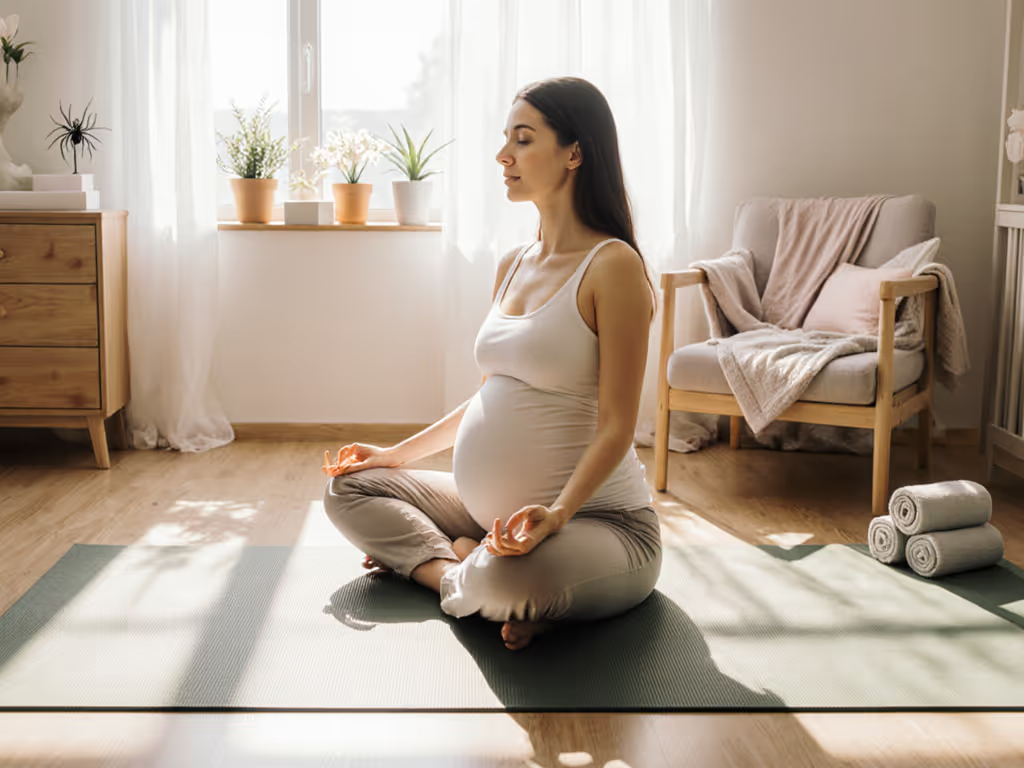
The popular yoga mat you used before pregnancy likely won't serve you through nine months of shifting balance, swelling joints, and heat-amplified sweat. A safe yoga mat for prenatal practice must do something most standard mats aren't engineered to do: anchor you as your center of gravity migrates, cushion joints under load you've never carried, and maintain grip when your palms and feet are wetter than they've ever been. The wrong mat becomes a liability the moment your baby's weight tilts your hips forward in second trimester; the right one frees your mind to focus on breath, alignment, and the work ahead.
Why Mat Performance Shifts with Pregnancy
Hormonal shifts in pregnancy cause ligament laxity, making joint protection non-negotiable.[1] Your body isn't just carrying extra weight; it's carrying it differently. Standard 4mm mats compress under that load, causing knee discomfort during lunges or wrist strain during cat-cow stretches. More critically, the non-slip mat requirement takes on new urgency: as balance wavers in the second trimester, even minor slips risk falls that could impact pelvic floor stability.[1]
I learned this viscerally during an August evening class when the AC failed and the room fogged. A lighter, thinner travel mat I'd brought slid during a simple twist. The backup (heavier, with a rubber top) held steady through puddles of sweat. After class, I timed dry-down and disinfecting. That night I updated my teaching kit: sweat performance first, everything else negotiable. Field heat is the truth serum for mat grip, and pregnancy amplifies every weakness. For wet-grip picks tested under heat, see our verified non-slip hot yoga mats.
First Trimester: Gentle Stability, Sweat Readiness
In early pregnancy, morning sickness and nausea mean you'll favor upright work and avoid head-down positions.[4] Your balance hasn't shifted dramatically yet, but your body is already sweating more than usual. A mat with 6-8mm of cushioning begins protecting your knees and wrists without creating the instability that comes from excessive compression.[2]
Look for a mat with non-slip texture even in dry conditions, because you're establishing your practice rhythm now, and a mat that slides during fundamental poses teaches poor alignment habits you'll carry forward.[2] Reversible designs with two anti-slip grip surfaces offer flexibility if one side feels better as your preference shifts.[2]
First trimester is also when to verify materials transparency. Demand proof of non-toxicity: testing for VOC emissions, certifications ruling out harmful adhesives, and clear labeling of rubber type (natural, synthetic, or blended).[1] "Non-toxic" is meaningless without proof.[1]
Second Trimester: Cushion Meets Stability, Wider Base
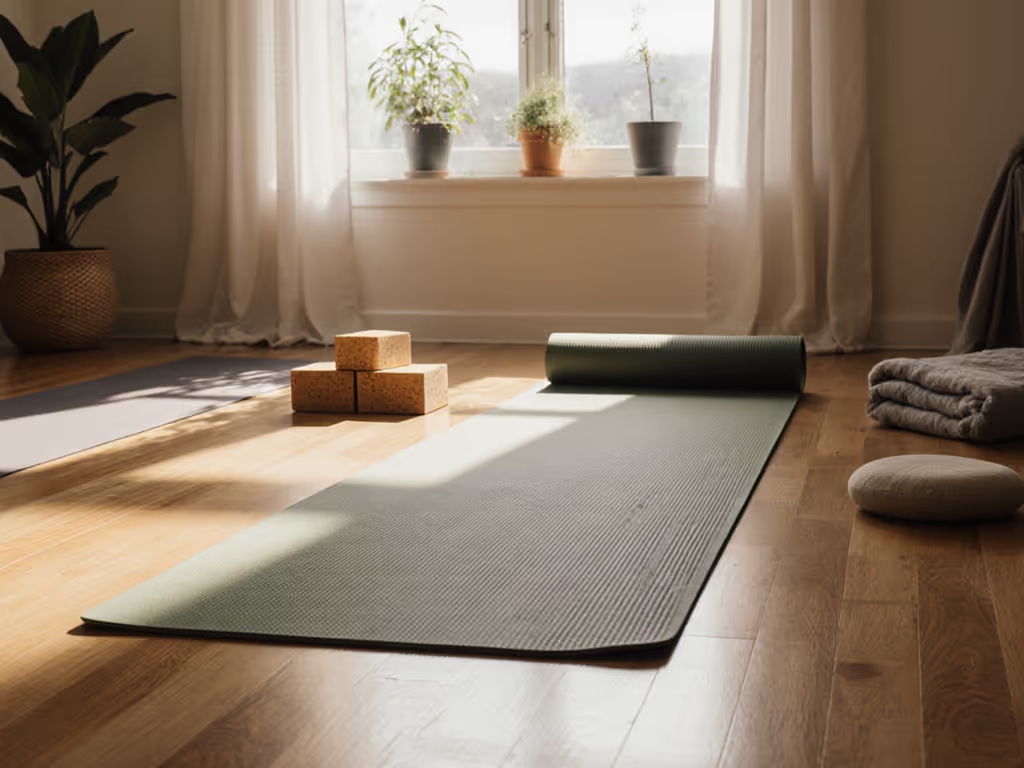
By second trimester, your hips have widened, your belly has grown, and your center of gravity has migrated forward. Standard mats (24" wide) force hips into awkward angles and leave feet hanging off edges.[2] You need width: many practitioners find an extra 6 inches of width transformative once the belly reaches this stage.[2] Explore 30-36 inch options in our extra wide yoga mats guide with tested edge stability and support.
Cushioning becomes more nuanced here. Thickness alone misleads: a 10mm mat of low-density foam may compress to 6mm in weeks, while 5mm high-density foam retains support.[1] You need sustained compression resistance, not just initial plushness. The sensory test is real: press your thumb into the mat and count how quickly it rebounds. Does it bounce back in one second, or does it slowly rise? The faster rebound signals better long-term durability.
Open twists (rotating away from the belly) become important practice elements.[4] Your mat must not shift during these transitions. Texture matters: a slightly textured, non-sticky surface helps you maintain balance as your center of gravity continues to shift.[2]
Third Trimester: Wide Stances, Sweat Resistance, Frequent Rests
Third trimester demands the most from your mat. Wide stances, slow transitions, and frequent pauses dominate practice.[4] Pelvic mobility and restorative rest take priority.[4] Side-lying relaxation often feels best.[4]
Sweat production reaches peak levels now. Your mat must maintain grip consistency both wet and dry: any slippage during a wide-legged forward fold or supported pigeon pose risks falls. Test grip by dampening your palm and testing contact at different angles. Mats that are tacky when dry but slippery when wet become unsafe. You need a surface engineered for wet conditions: TPE (thermoplastic elastomer) or natural rubber formulations with proven track records.[1]
Width becomes non-negotiable in third trimester. Your feet and ankles shouldn't hang off the mat during foundational poses.[2] A 30+ inch width ensures stable landing zones for hands and feet.[1]
Mat Specifications: What to Measure Before You Buy
Thickness and Density
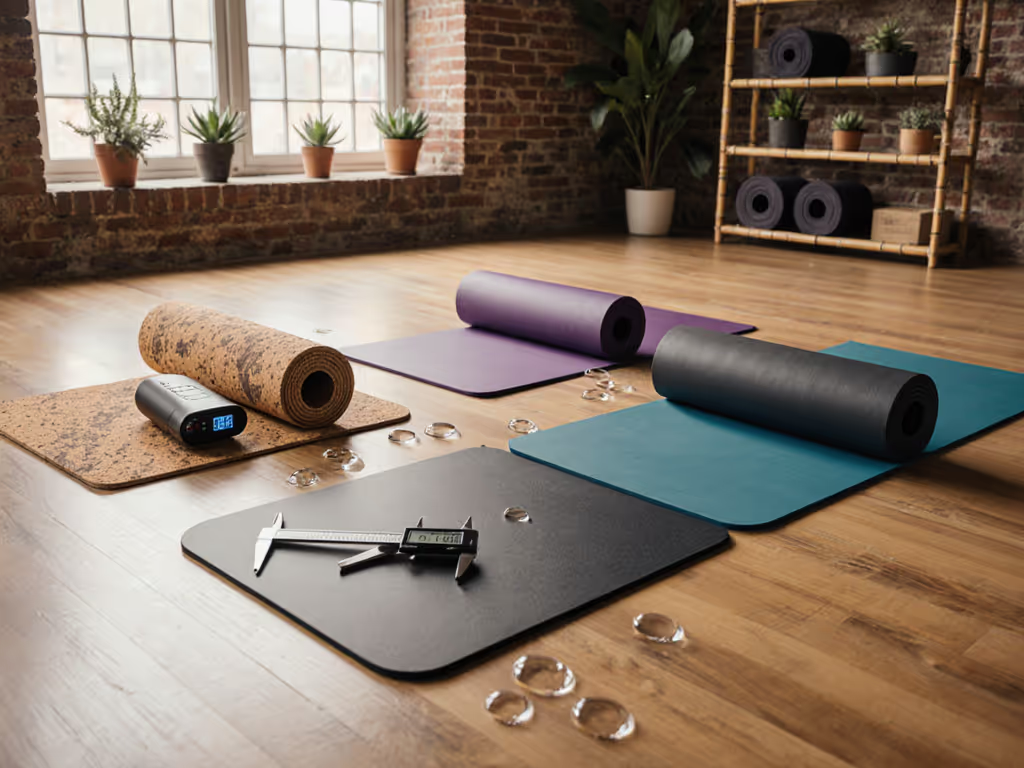
Seek 8-10mm thickness with firm density to provide real support without compression failure.[1] Verify density by checking manufacturer specs (g/cm³ is the measurable standard). Higher density (closer to 0.5 g/cm³) means better retention of cushioning through daily use.
Timing is everything. I tested seven 'extra cushioned' mats at a prenatal studio, and one collapsed to 30% of original thickness after 30 days of daily use. The instructor quietly replaced it, calling it "the disappearing mat." Always verify cushion integrity, not just specs. Ask manufacturers for compression test results or seek independent lab verification.[1]
Width and Length
Standard mats are 72" × 24". Prenatal practice benefits from 30+ inches of width and, for taller practitioners, 80+ inches of length.[1][2] Extra width accommodates hip opening and prevents wrist misalignment during modified poses.
Non-Slip Surface Texture
A slightly textured, non-sticky surface supports stability through all three trimesters.[2] Avoid highly grippy finishes that create friction discomfort on skin; aim for tactile consistency that works equally well dry and wet. Run your fingers across samples: good texture feels pleasant, not abrasive.
Material Composition
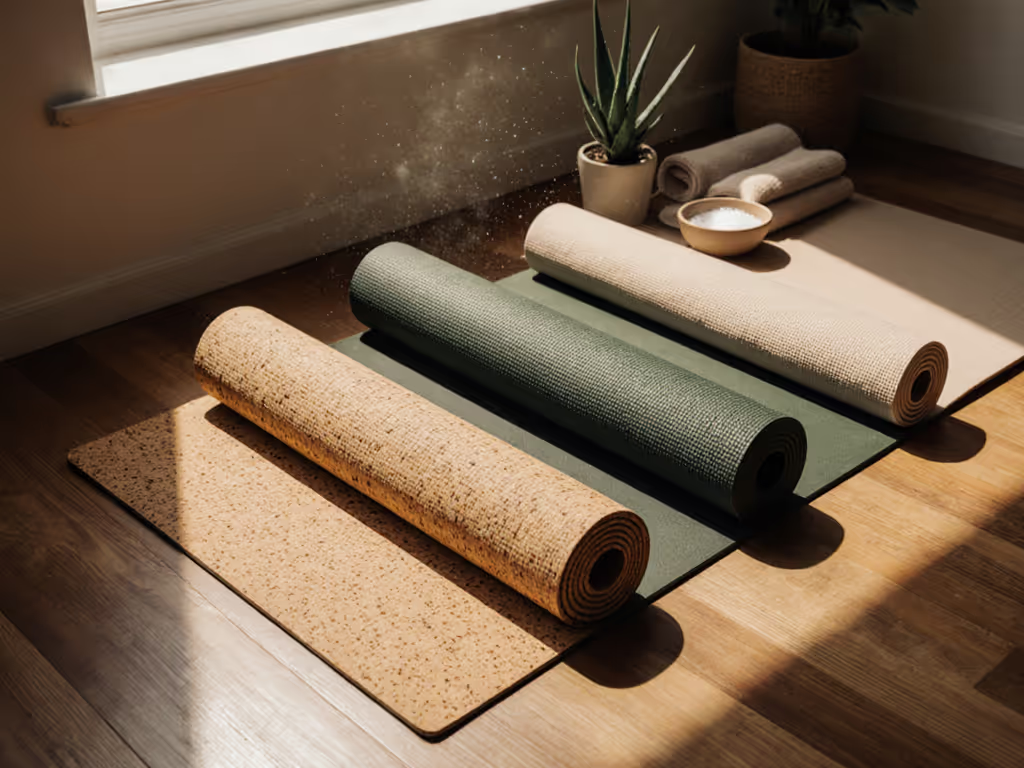
Common prenatal-friendly materials include natural rubber, TPE, and premium PU (polyurethane). Each has trade-offs:[1]
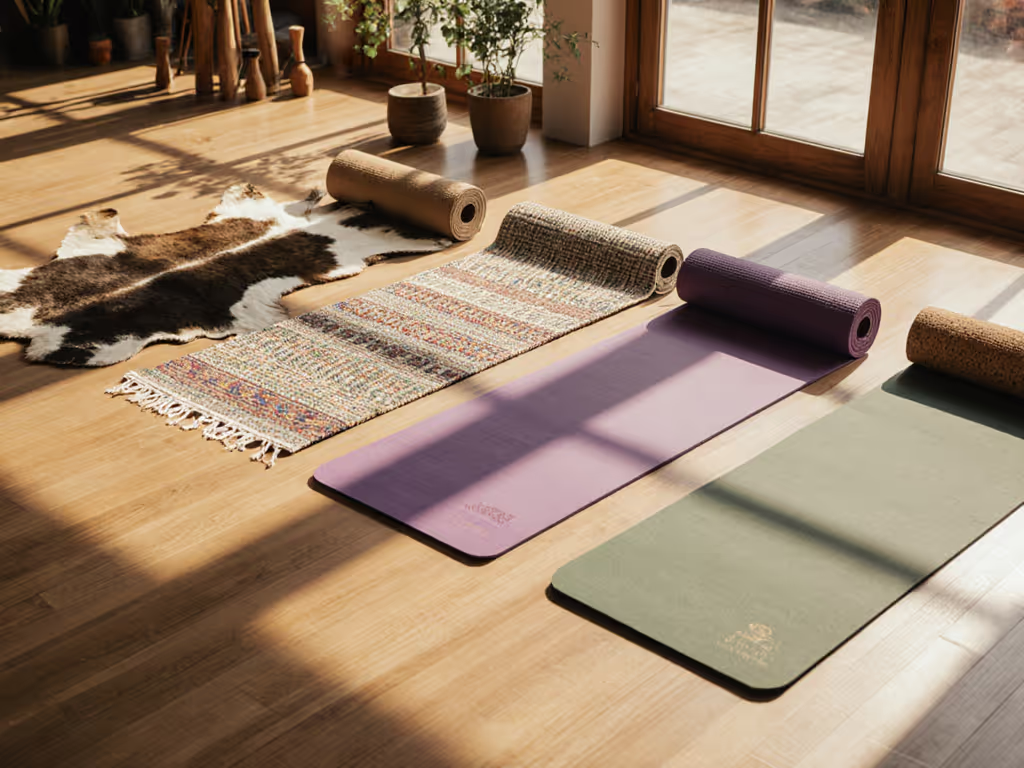
- Natural rubber: Excellent grip and durability; risk of latex sensitivity in rare cases; typically pricier; compostable end-of-life.
- TPE: Excellent wet/dry grip consistency; good durability; recyclable; often more affordable; fewer allergen concerns.
- PU: Lightweight, responsive, often reversible; can stain with certain cleaners; good for travel; mid-range price.
Performance Testing: Sweat, Grip, and Dry-Down
Pregnancy means sweatier practices, yet many mats lose grip when damp.[1] Test grip authentically: dampen the mat surface and practice transitions. Does your hand slip during downward dog? Do your feet slide during warrior poses? A quality prenatal mat should feel stable within 5-10 seconds of hand/foot contact, wet or dry.
Dry-down timing matters for portability. If you're practicing at home and rolling your mat immediately, speed of drying is less critical. If you're attending studio classes, a mat that air-dries fully in 4-6 hours prevents odor and mildew. Test this by dampening a section, timing evaporation, and noting any residual moisture or smell.
Tested soaked, trusted dry (this is the field reality that matters). Before committing to a purchase, ask instructors or studio owners if they've used the mat through sweaty flows or heated classes. Their field notes are worth more than marketing copy.
Material Safety and Certification
Demand proof of low VOC emissions and freedom from harmful adhesives. Look for certifications such as OEKO-TEX (testing for over 1500 banned chemicals), Greenguard, or similar third-party verification.[2] Many eco-friendly options using natural rubber or TPE are biodegradable and 100% recyclable, adding end-of-life value to your purchase.[2]
Asking about specific adhesive types and surface treatments is fair (manufacturers should have data readily available). Off-gassing concerns are real, especially in pregnancy; new mats should air out for 24-48 hours in a well-ventilated space before first use. If you’re sensitive to smells or materials, see our non-toxic yoga mats guide for low-VOC options and testing tips.
Size, Portability, and Trimester Evolution
Standard dimensions (72" × 24") work for most, but pregnancy benefits from extra width.[1][2] If you're commuting to studio classes, weight and portability matter. Lighter mats (3-4 lbs) are easier to carry; thicker mats (6-8 lbs) feel more substantial underfoot but demand more effort in transit.
Consider a two-mat approach: a wider, cushioned mat for home practice and a lighter, travel-friendly version for studio work. This flexibility mirrors the anecdote from that failed-AC August class (sometimes the perfect mat is the one you have room to keep as backup).
Recommended Mat Pairings by Priority
| Your Priority | Best Approach | Why It Works |
|---|---|---|
| Budget + Early Pregnancy | 6-8mm TPE mat, standard width | Sufficient cushion before major hip changes; good grip retention; accessible price point |
| Sweaty Flows + Stability | 8-10mm natural rubber or premium TPE, 30+ inches wide | Wet/dry grip consistency prevents slips when balance is compromised; durability justifies cost |
| Joint Sensitivity + Power Classes | High-density PU or natural rubber, reversible design | Responsive cushioning without compression failure; flexibility to choose grip surface that suits your sweat profile |
| Eco-Conscious + Long-Term Value | Biodegradable TPE or natural rubber with certification | Sustainability without sacrificing performance; plans to repurpose or recycle postpartum |
| Travel + Apartment Living | Lightweight foldable mat, 4-6mm, textured surface | Portable, quiet landings, easy storage; sufficient for gentle practice; good for tight spaces |
Integrating Prenatal-Specific Practice Modifications
Your mat choice should enable the movement patterns your body needs. Avoid hot yoga or Bikram during pregnancy: overheating risks fetal development.[3] Supported butterfly pose, cat-cow stretches, gentle hip circles on hands and knees, and restorative poses using props become your foundation.[3] Your mat must accommodate kneeling, side-lying, and wide-legged positions without shifting or compressing unevenly.
In third trimester especially, pelvic tilts and supported forward-leaning positions encourage optimal fetal positioning (discuss with your healthcare provider).[3] These require a mat that stays put under asymmetrical weight distribution. A mat that slides during one-leg-forward poses defeats the safety goal.
Cleaning, Durability, and Long-Term Value
Pregnancy practice is intense: daily use, sweat exposure, frequent cleaning. Ask about care protocols: Can you use mild soap and water? Do certain cleaners damage the surface? PU and TPE tolerate most cleaners; some natural rubber finishes can stain or degrade with harsh products.[1] To preserve grip without damage, follow our natural rubber mat cleaner guide.
Durability measured in years, not months, is the sustainability benchmark. A mat that lasts through pregnancy and postpartum practice (3+ years of regular use) justifies its cost per use. Low-cost mats that peel, tear, or lose grip within 6-12 months create false economy.
Final Verdict: Matching Mat to Your Pregnancy Practice
No single mat wins universally: it's about your body and practice.[1] The best mat for prenatal comfort isn't the thickest or greenest on paper; it is the one that supports you confidently through every trimester, then serves you for years postpartum.[1] That's sustainability with receipts: mats that earn their place in your practice, day after day.
Start by defining your non-negotiables: Are you practicing at home or in a studio? Do you run hot and sweat heavily? Are you prioritizing cushioning or stability? Do you have space for a wider mat? Is eco-certification important to your decision? Once you've named these criteria, evaluate options against field-tested performance: wet grip, compression retention, sweat management, and durability.
Ask studios or instructors which mats they see in regular pregnancy practice. Ask about real wear patterns: peeling edges, compression loss, grip failure over time. These lived observations cut through marketing and help you invest wisely.
Tested soaked, trusted dry. Choose a safe yoga mat that holds steady through your sweatiest flows, supports your shifting joints, and grows with you through all three trimesters. Your practice, and your peace of mind, depends on it.
Related Articles