Large Yoga Mats for Urban Parks: Grip & Durability Test
By Jonah Park • 19th Mar
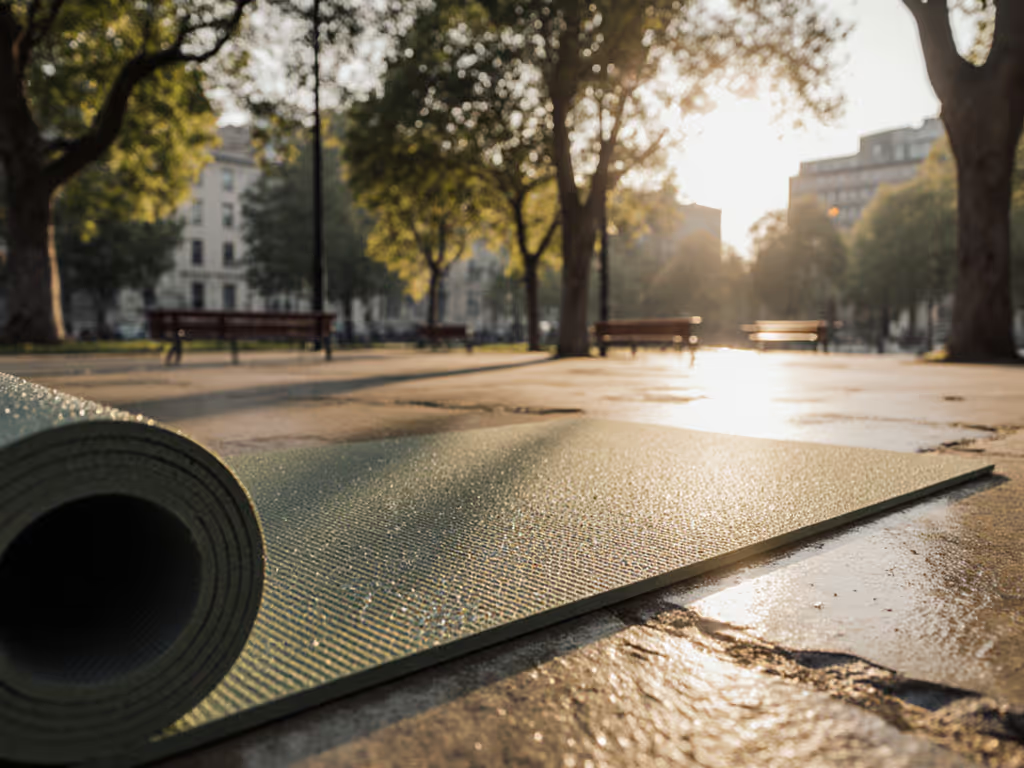
When you roll out a large yoga mat in an urban park (concrete crumbling at the edges, humidity rising off the pavement, strangers' footsteps echoing nearby) you quickly learn that size alone isn't performance. A large yoga mat that grips reliably while wet, resists peeling after months in mixed weather, and actually stays put under your hands matters far more than dimensions on a spec sheet. Grip failure mid-handstand or a mat that sheds its surface layer by June isn't just annoying; it's a safety issue and a waste of money. For park-specific picks and care tips, see our outdoor large mat guide covering UV, grass, and rough surfaces.
I've tested mats in real outdoor conditions for years, from humid summer parks to frost-cracked concrete, and I've learned to separate marketing claims from what actually survives. A friend once bought a bargain mat every quarter, spending more annually than a solid mid-range choice would cost. We tore a few open, tested surfaces in a sunny window for weeks, and left them exposed to sprinklers and foot traffic. The survivor wasn't the cheapest; it was the one that didn't crumble, stretch, or smell like chemical regret. That taught me: pay for performance, not polish.
Here's my hard-threshold test framework for large yoga mats built to grip and last in urban park conditions.
1. Verify Thickness and Density Separately (Don't Confuse Them)
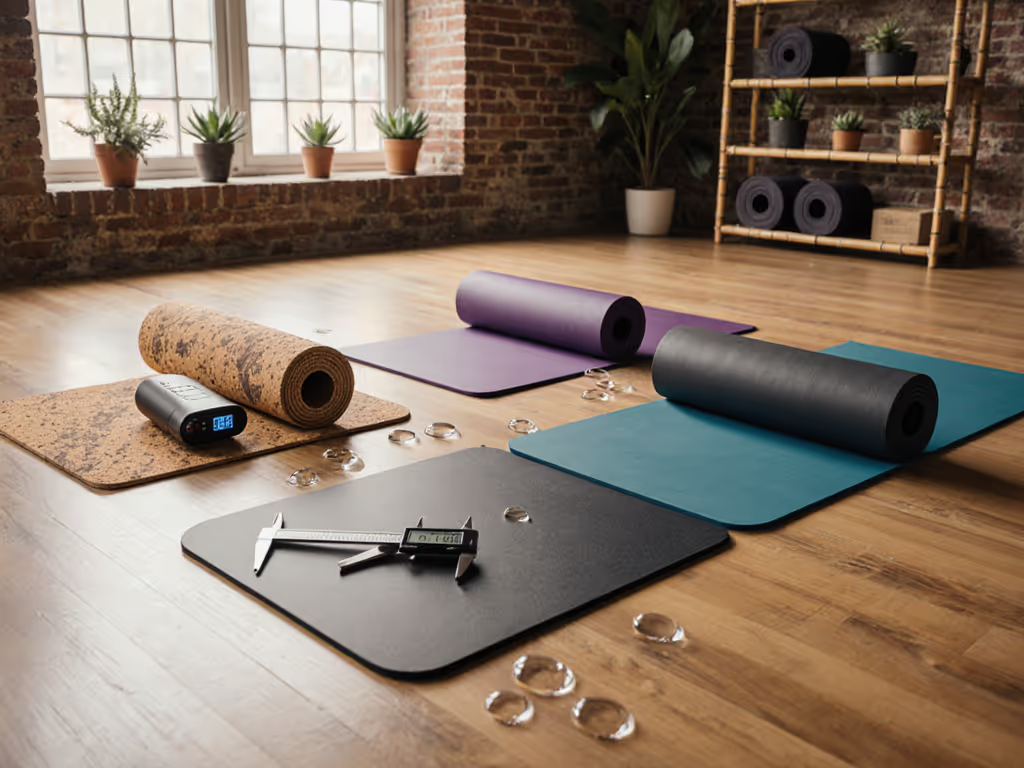
A thick mat isn't automatically a durable mat. Density is what stops your hands from bottoming out on gravel or separates you from cold concrete. A study by performance testing labs confirms what I've observed: a thinner, denser mat outperforms a thick, squishier one in balance poses and holds up longer under pressure.[1]
For outdoor parks, aim for 5-6 mm thickness paired with closed or semi-closed cell structure. Closed-cell mats shed water better and resist absorbing odor. Open-cell mats (often in eco-natural-rubber lines) grip brilliantly when damp but take hours to dry, which is a drawback if you're commuting home on public transit or live in high-humidity climates.
Look for mats rated for both "cushion" and "ground feel": you want padding at your joints but enough structural feedback to trust your standing balance. If the vendor can't describe density or feel, move on. Hard threshold: if a mat compresses completely under your kneeling weight, it won't age well.
2. Test Grip in Both Dry and Wet Conditions (Lab Claims Aren't Field Proof)
Grip is the non-negotiable spec for parks. Mats marketed as "grippy" often perform well dry but fail when sweat or dew hits them, or vice versa. Performance testing labs have measured this; mats with microtexture or open-cell rubber tend to absorb moisture and gain traction, but that same absorption becomes a durability liability if the mat never fully dries.[1]
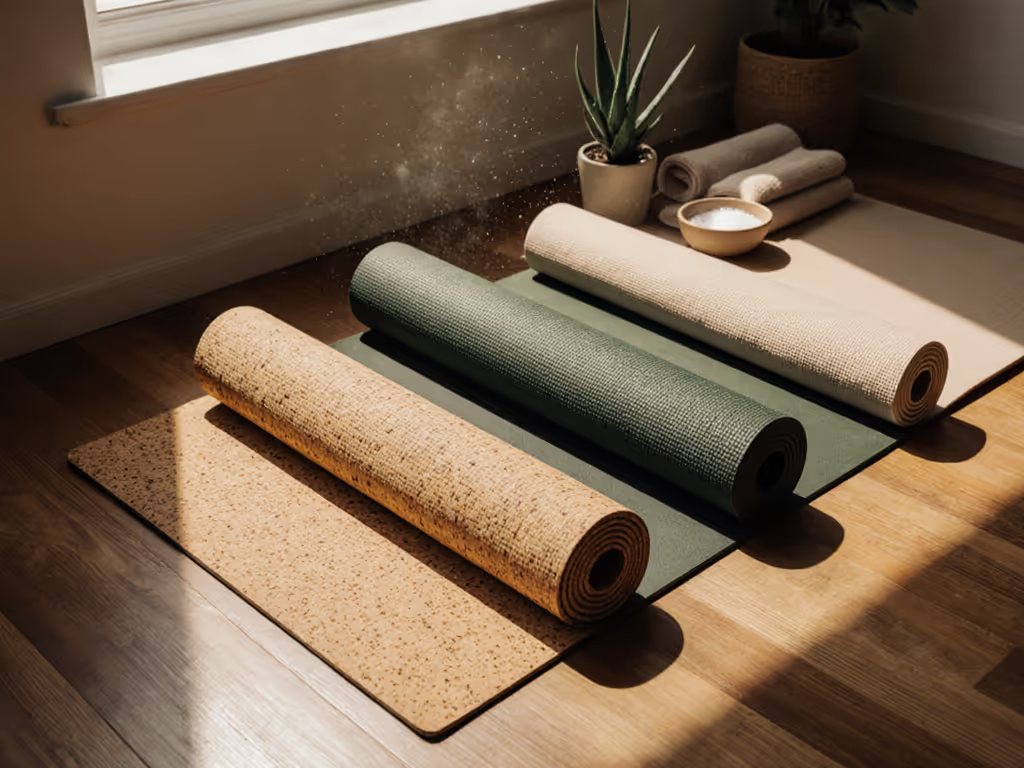
Natural rubber mats (sustainably harvested cork and tree rubber combos) tend to grip better as they age and absorb a thin layer of moisture, creating friction.[2] Synthetic polyurethane (PU) surfaces can feel slippery initially and require a break-in salt scrub (a hassle), but often hold grip more consistently across temperature swings.
Check customer reviews for a specific complaint pattern: "Great grip when wet but unreliable when dry" or vice versa. That's data. Mats with balanced grip profiles (natural rubber over a rubber base, or textured PU) are safer bets for urban outdoor use where conditions shift.
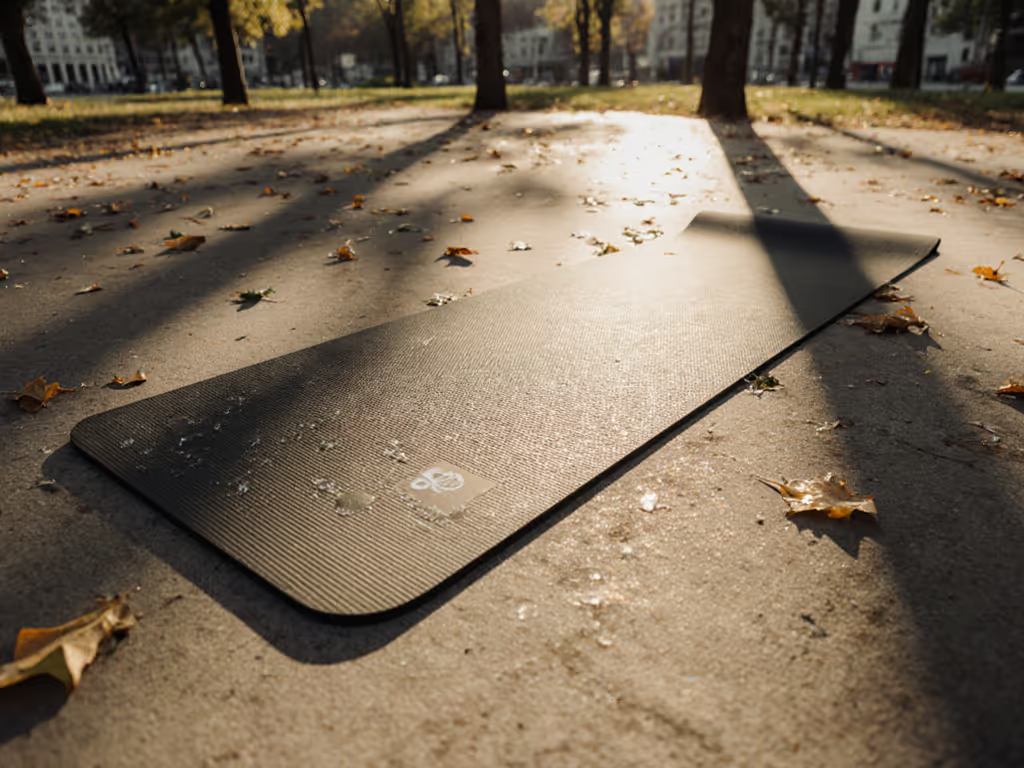
3. Evaluate Materials for Real-World Durability (Don't Buy Hype About "Eco")
Eco-friendly labeling is widespread but vague. For a clear breakdown of trade-offs, read our PVC vs natural rubber comparison before you decide. I prioritize transparency: what's the top surface, the base, the glue?
Natural rubber and cork wear beautifully under clean, consistent use but can degrade faster on rough concrete, sand, or dirt. One respected tester noted that open-cell designs degrade more quickly on abrasive surfaces like pavement.[1] If your park has gritty concrete or exposed aggregate, a closed-cell or PU top will outlast natural rubber.
Synthetic blends (TPE, PU, jute composite) resist flaking and edge curl better in variable outdoor conditions but may off-gas initially and won't please eco-focused buyers. Trade-off acknowledged.
Hard threshold: avoid mats with weak edge binding or glue that smells like solvent two weeks in. Buy a sample or order from retailers with no-hassle returns. Check warranty terms for outdoor use exclusions; many premium mats void coverage if used outdoors.
4. Measure Size Against Your Body and Practice Style ("Large" Is a Range)
A standard mat is 68 inches long by 24 inches wide. "Large" usually means 72-73 inches by 26 inches (an extra 4-5 inches in both dimensions). For taller yogis or wider practice (yin, restorative, partner work), that matters. For compact vinyasa, it's overkill.[1]
Before buying, practice a few forward folds and lunges on your floor to understand how much mat width you actually need. Urban park space is often limited; an oversized mat might not fit your chosen corner or be awkward to roll and carry home via transit.
Weight also factors into durability perception: heavier mats (5+ pounds) feel more stable and tend to be denser, but they're harder to commute with. If portability is your secondary need, large + lightweight creates a trade-off in durability; accept thinner padding or synthetic materials.
5. Look for Textured or Rubber-Based Surfaces Over Smooth Finishes
Smooth surfaces (whether PVC, vinyl, or glazed PU) are easier to clean but slip more readily when wet. Micro-textured or fabric-textured surfaces grip better but trap dirt and require more thorough cleaning.[2]
Consider the setup: Can you rinse your mat at a park fountain? Will you carry it through a dusty commute? Textured surfaces lock in grit unless you're meticulous. Smooth rubber or PU is forgiving for outdoor abuse.
One tester (a backcountry ranger) loved a thin foldable mat for outdoor use specifically because its simplicity meant less to maintain, and she didn't fret about damage.[1] Think about your tolerance for wear and tear. If you're committed to precision cleaning, textured natural rubber delivers grip for years. If you prefer low-key maintenance, closed-cell PU forgives neglect.
6. Confirm Warranty and Cleaning Instructions (These Reveal Hidden Costs)
Premium mats often void warranties if cleaned with anything other than brand-approved products or tap water.[2] That's a red flag hiding in fine print. If a mat requires special cleaner, calculate the cost over five years: it adds up.
Check whether outdoor or gym-floor use voids coverage. Some manufacturers exclude liability if you use the mat in uncontrolled environments (parks, studios, beaches). Hard threshold: if the warranty explicitly excludes outdoor use, the mat isn't built for your use case, so pass. Compare coverage across brands in our yoga mat warranty analysis so you know what actually gets replaced.
Eco-friendly mats like Jade or cork-based options often allow machine washing or simple soap-and-water cleaning, which is practical for park use.[2] Factor ease of care into durability assessment; a mat you can wash in 10 minutes is one you'll actually maintain, extending its life.
7. Set a Price-to-Durability Target, Not Just a Budget
Large yoga mats range from $30 (thin foldable budget) to $200+ (premium natural rubber or cork). The gap reflects materials, testing, and (sometimes) brand markup. Here's plain pricing math:
- A $40 mat lasting 18 months = ~$2.22/month
- An $80 mat lasting 4 years = ~$1.67/month
- A $150 mat lasting 6 years = ~$2.08/month
The mid-tier performer often wins. Budget mats lose value faster through delamination or slipping issues; hypey premiums sometimes underperform relative to cost. Spend once on what lasts under sweat, sun, and time.
Seek independent testing reviews that mention long-term durability after outdoor exposure, not just initial feel. Consumer labs and yoga-focused testers publish data on compression resistance and surface integrity after 6-12 months.[1]
8. Test Grip on Your Specific Floor Before Committing
If possible, borrow or order a mat with a return window and test it on the exact concrete, tile, or composite your park uses. Our floor compatibility guide explains how wood, tile, concrete, and carpet change grip and what to test. Grip can vary wildly by surface texture. A mat that grips brilliantly on smooth gym flooring might be mediocre on rough park pavement.
Bring a spray bottle to simulate sweat or dew. Perform a few downward dogs and high planks. If your hands or feet travel more than an inch during holds, grip is insufficient for your safety threshold.
Next Steps: Build Your Test and Buy with Confidence
Narrow your search to mats 72+ inches long by 24+ inches wide with closed or semi-closed cell structure and confirmed grip data in both wet and dry conditions. Check warranty terms for outdoor use and cleaning flexibility. Calculate durability cost per month over realistic product life (2-4 years for budget; 4-6 for mid-range; 5-7 for premium durability models), and compare against your grip and cushion non-negotiables.
Order from retailers offering no-fault returns for 30 days, test the mat in your park under your actual practice intensity, and if grip or comfort fails, return it guilt-free. One solid test session beats any amount of online research. Value isn't the lowest sticker price; it's the mat that doesn't betray you mid-flow and still grips strong a year in. Pay for performance, not polish, and your park practice will thrive.
Related Articles