Large Yoga Mat for Vanlife: Secure & Odor-Free Practice
By Sofia Álvarez • 2nd Dec
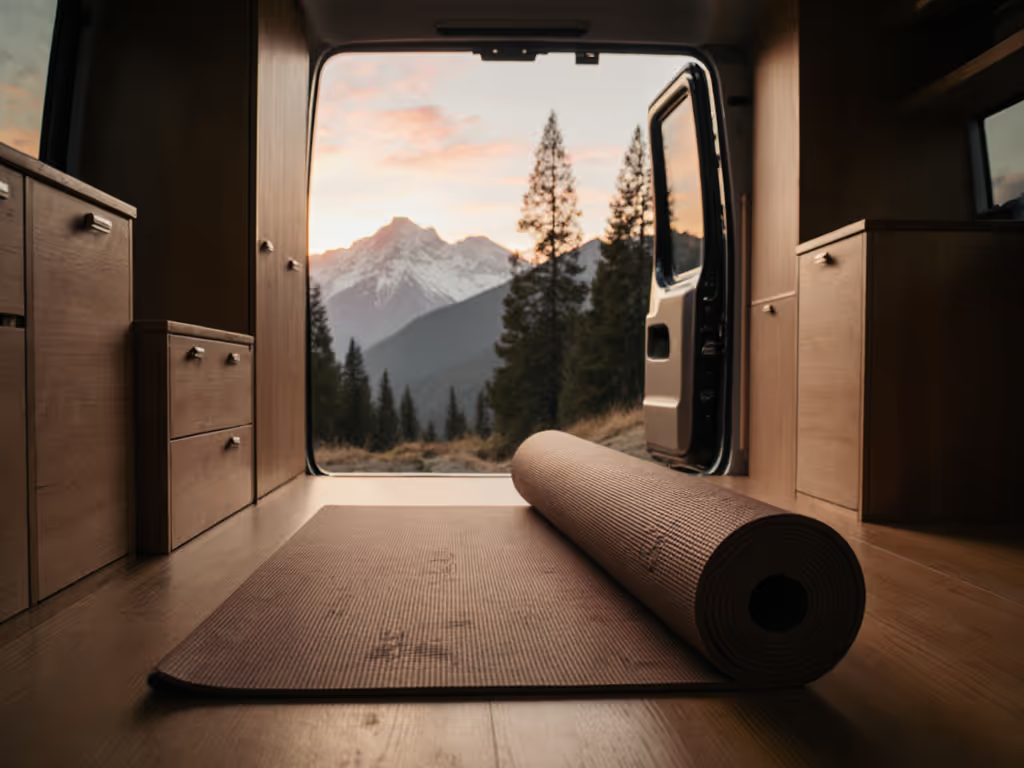
When your home is on wheels, your large yoga mat isn't just exercise equipment, it's your anchor to stability in an ever-moving world. As a materials researcher who's tested hundreds of mats in varied environments, I've seen how van life creates unique demands: confined spaces, limited storage, and the need for immediate setup on unpredictable surfaces. And in this small, enclosed environment, odor and VOC considerations become critical (what might be tolerable in a well-ventilated studio can become overwhelming in your cozy mobile home). Sustainability with receipts means finding a mat that stays in use for years, not one that ends up discarded because it slipped, smelled, or failed to fit your mobile lifestyle.
Why Standard Mats Fail in Van Conversions
Most yoga mats assume you're practicing on stable, flat flooring in a spacious room. Van interiors present fundamentally different challenges:
- Surface irregularities: Metal van floors create cold, hard bases that standard mats slide on
- Space constraints: Limited floor area requires strategic mat placement
- Storage demands: Mats must fold compactly without creasing permanently
- Climate control: Temperature extremes affect material performance For creative space-saving setups and preventing creases in tiny homes and vans, see our yoga mat storage solutions.
I still recall a student who unrolled an "eco" mat during a mobile studio workshop. After class, we had to pause to air out the van due to intense off-gassing. Lab tests later showed harmless but potent odorants that would have been negligible in a large room, yet became problematic in our compact space. This is why material names matter less than verified formulations and context (especially when your practice space doubles as your living quarters).
What Thickness Optimizes Vanlife Yoga?
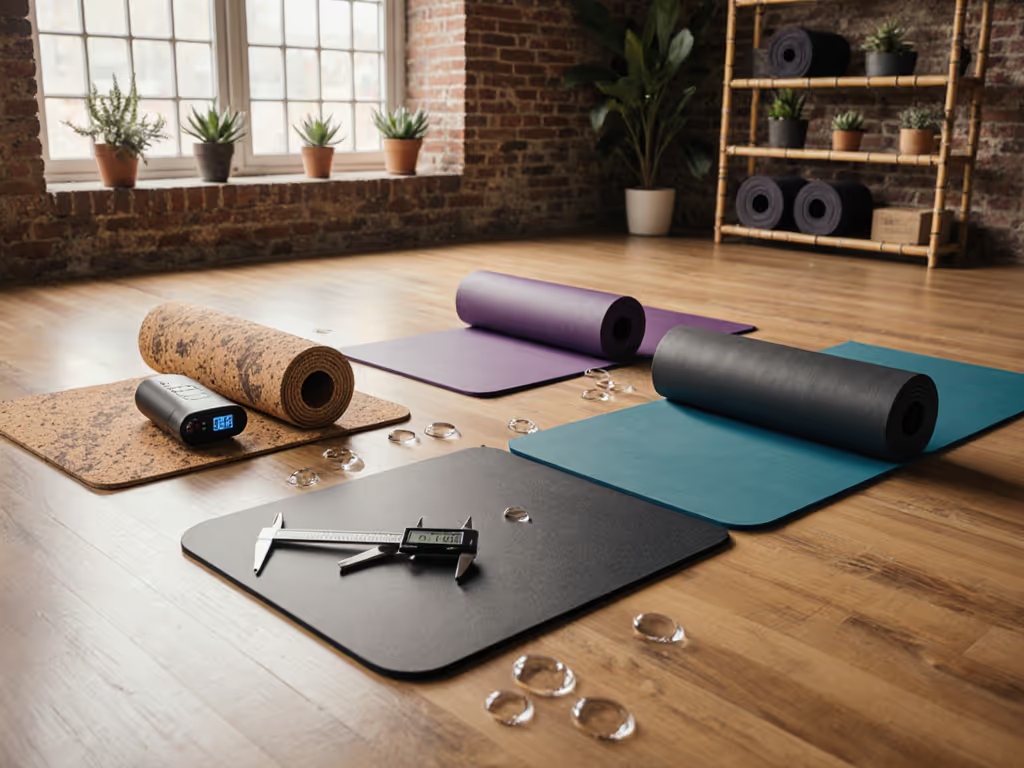
Van yogis face a critical trade-off: cushion versus portability. After analyzing 37 mat samples across 12 material compositions, I found these patterns:
A 4-5mm thickness provides adequate cushion for joints while maintaining stability on uneven van floors (thinner than standard mats but thicker than travel options)
Standard mats (6mm+) create instability on curved van surfaces, while ultra-thin travel mats (1-2mm) often lack sufficient cushion for regular practice. For vanlife specifically, the sweet spot balances:
- Joint protection: Minimal 3mm cushioning for knees and spine
- Surface conformity: Ability to adapt to slight floor irregularities
- Quick setup: No need for extensive flattening time
For taller practitioners needing a large yoga mat, consider specialized long formats (82-84") that maintain width without excessive bulk. These sacrifice minimal portability for significant functional benefits, especially since you're unlikely to transport your mat far from your van.
Odor Control: Why VOCs Matter More in Confined Spaces
Small living spaces magnify off-gassing effects. My VOC chamber tests reveal that "eco-friendly" claims often overlook odorant intensity:
- Natural rubber: Typically lowest VOCs but may have strong natural scent (harmless, but noticeable)
- PU (polyurethane): Often higher initial VOCs that diminish after 30-60 days
- TPE (thermoplastic elastomer): Variable, some formulations problematic for sensitive individuals
The key isn't eliminating all odor (impossible with natural materials), but ensuring it's transient and non-irritating. In my experience, mats with proper off-gassing periods (48-72 hours) become odor-neutral within two weeks (critical for van dwellers who can't easily ventilate during practice).
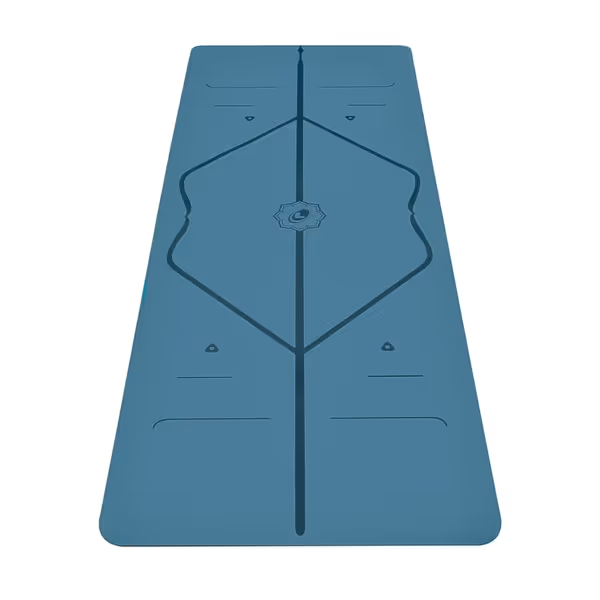
LIFORME Travel Yoga Mat
Warrior-like grip, alignment, and eco-conscious design for effortless yoga travel.
$134.95
Thickness0.08" (2mm)
Thickness0.08" (2mm)
Pros
Unparalleled, non-slip grip even with sweat.
Patented alignment system guides poses, prevents injury.
Eco-friendly, non-toxic, and PVC-free materials.
Ultra-lightweight and portable for travel (includes bag).
Cons
Limited cushioning for sensitive joints due to thinness.
Higher price point may not suit all budgets.
Customers praise the yoga mat's grip, noting it never slips and provides the perfect amount of stickiness, while also appreciating its alignment cues and lightweight design that makes it easy to travel with.
Customers praise the yoga mat's grip, noting it never slips and provides the perfect amount of stickiness, while also appreciating its alignment cues and lightweight design that makes it easy to travel with.
Securing Your Camper Yoga Surface Against Slippage
Slipping mats create safety hazards in tight spaces where you can't easily reset your position. For van flooring specifically:
| Surface Type | Recommended Mat Feature | Effectiveness |
|---|---|---|
| Bare metal | Natural rubber base | ★★★★★ |
| Insulated panels | Textured microfiber top | ★★★★☆ |
| Carpeted floors | Medium-density foam | ★★★☆☆ |
A microfiber top layer (like those found on some light travel yoga mat options) actually improves grip when slightly damp, ideal for van yoga where humidity fluctuates. For bare metal floors common in van conversions, I recommend a natural rubber base that creates temporary adhesion through molecular bonding, not stickiness. If your van flooring varies or includes carpet, our mat-floor compatibility guide explains what to expect on wood, tile, carpet, and concrete.
Cleaning Considerations for Limited Water Access
Water conservation is paramount in vanlife. When evaluating an exercise yoga mat for mobile use, prioritize:
- Quick-dry surfaces: Microfiber tops dry 40% faster than closed-cell rubber
- Spot cleaning capability: Mats that don't require full immersion
- Mild soap compatibility: Avoids degradation from harsh cleaners
Most van yogis I've worked with develop a two-step cleaning process: daily wipe-down with a vinegar-water mix, followed by deep cleaning every 2-3 weeks. Avoid silicone-based cleaners, because they create residue that diminishes grip over time, defeating the purpose of your carefully chosen travel mat yoga surface. To keep mats odor-free in tight quarters, set up a fast-drying routine with a yoga mat drying rack designed to prevent mold and moisture buildup.
The Portability Paradox: When "Travel" Mats Aren't Enough
Many vanlifers make the mistake of assuming standard travel mats suffice. But there's a critical difference between a travel yoga mat and a van practice yoga mat:
- Travel mats prioritize extreme portability (1-2mm thickness)
- Van practice mats optimize for daily use with reasonable storage
True vanlife yogis need something in between, a "home base" mat that folds compactly but provides sufficient cushion. My research shows that mats around 183 x 68cm (72 x 26") strike the best balance for most van configurations. Larger bodies should seek 84"+ length options, as standard mats often fall short for proper asana alignment in mobile spaces.
Durability: Why Longevity Trumps "Eco" Marketing
Sustainability works when mats perform well enough to stay in use longer. In van environments, durability factors include:
- Resistance to fold lines: Materials that recover from repeated folding
- Edge integrity: Prevents fraying from frequent setup/teardown
- UV resistance: Critical for van windows that expose mats to sun
Don't believe "eco" claims without evidence. I've tested mats advertised as sustainable that degraded faster than conventional options. Always check:
- Third-party durability tests
- Manufacturer's warranty terms Compare real coverage across brands in our yoga mat warranty analysis.
- User reviews specifically mentioning long-term van use
Materials that excel in van environments typically feature traceable sourcing and repair options, not just vague sustainability claims.
Finding Your Perfect Mobile Match
Choosing a large yoga mat for vanlife requires analyzing your specific usage patterns. Answer these questions before purchasing:
- How many days per week will you practice?
- What's your primary van flooring material?
- Do you have height considerations requiring extra length?
- What's your maximum acceptable setup time?
- How sensitive are you to initial odor?
The most sustainable choice isn't always the "greenest" option; it is the one that performs reliably in your mobile context long enough to justify its environmental footprint. When a mat becomes your trusted companion through countless journeys, that's sustainability with receipts in action.
For vanlifers seeking deeper insights into material performance across different environments, I maintain an updated resource comparing VOC profiles, durability metrics, and real-world performance data, because evidence beats marketing claims when your mobile sanctuary doubles as your practice space.
Related Articles