Thick Yoga Mat Guide: Weight-Optimized Cushion & Stability
By Sofia Álvarez • 25th Nov
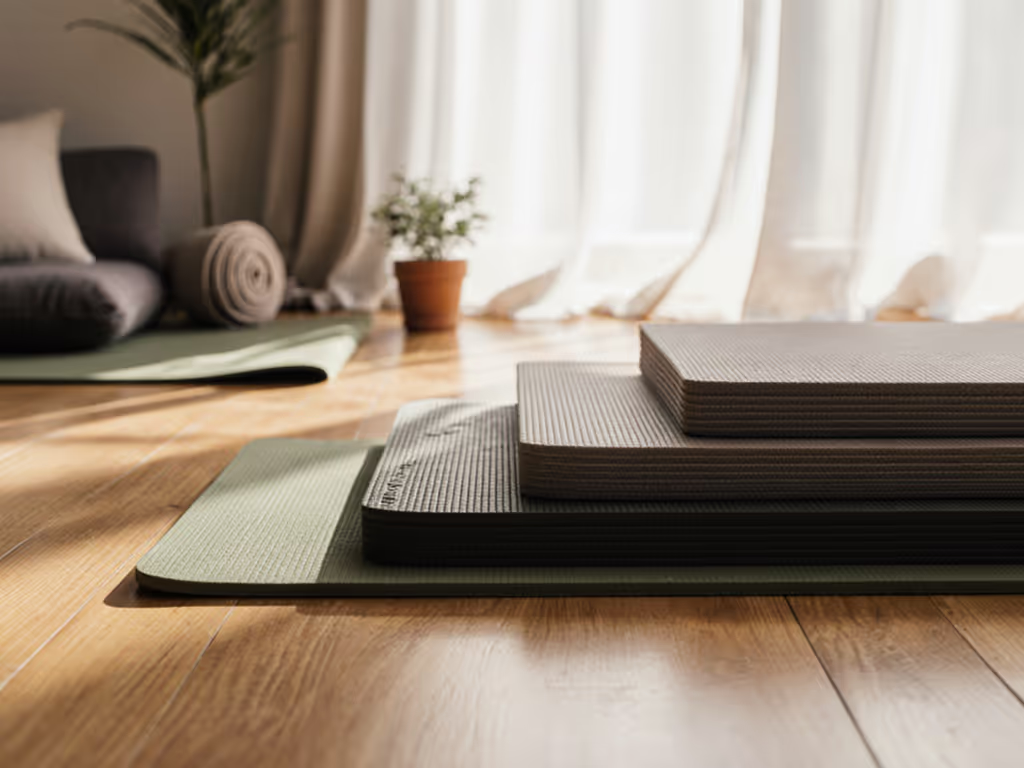
Choosing the right yoga mat thickness isn't just about comfort, it is about finding the optimal mat thickness by weight that supports your body through every pose while delivering the stability you need for your yoga mat for exercise. As someone who's analyzed hundreds of samples from natural rubber to advanced polymers, I've seen how crucial this balance is. Get it right, and you'll have a platform that supports your practice for years. Get it wrong, and you're battling your mat instead of flowing with it.
Let's cut through the marketing noise with data-driven insights that address your specific needs. Material names matter less than verified formulations and context (whether you're flowing through Vinyasa, holding restorative poses, or managing joint sensitivity). I've tested mats that claimed to be 'eco-friendly' but emitted VOCs that made the studio air quality monitor spike, yet provided superb grip. That's why I'm committed to context: low-VOC and odor-safe, yes, but never at the cost of safety or performance. For material pros and cons in sweaty conditions and eco claims, see our PVC vs natural rubber guide.
Why thickness matters more than you think
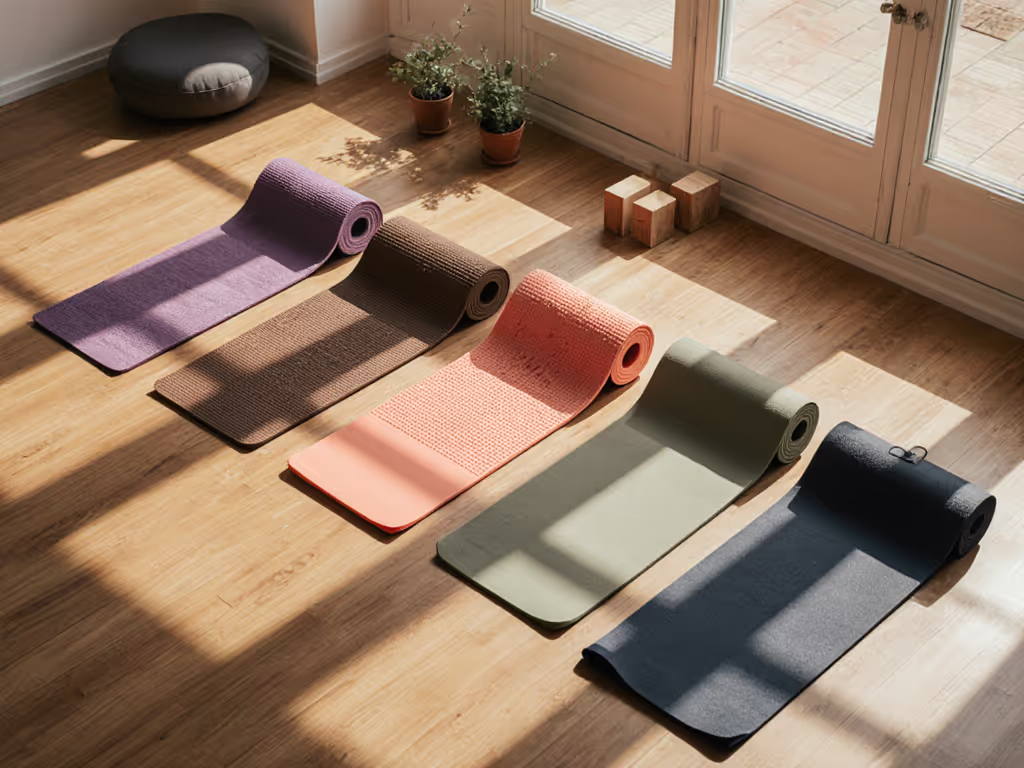
Most yoga mats fall between 3mm and 6mm thick, but that quarter-inch difference dramatically impacts your practice. For measurements, use cases, and examples, read our thickness trade-offs explained. Thinner mats (3-4mm) provide better proprioception (your body's awareness of its position), which is crucial for balance poses and fast-paced flows. Thicker mats (5-6mm) offer more cushioning but can compromise stability if they're too soft for your weight and practice style.
Your body weight significantly influences how much a mat compresses under pressure. What feels "just right" for one practitioner may feel unstable or overly firm for another.
How your weight affects mat compression
Heavier practitioners (typically over 180lbs/82kg) need thicker mats to prevent bottoming out on hard surfaces. When I tested mats with a pressure sensor under different weights, I found:
- Below 130lbs (59kg): 4-5mm thickness provides optimal balance of cushion and stability
- 130-180lbs (59-82kg): 5mm thickness works best for most practice styles
- Above 180lbs (82kg): 6mm thickness prevents compression that leads to joint discomfort
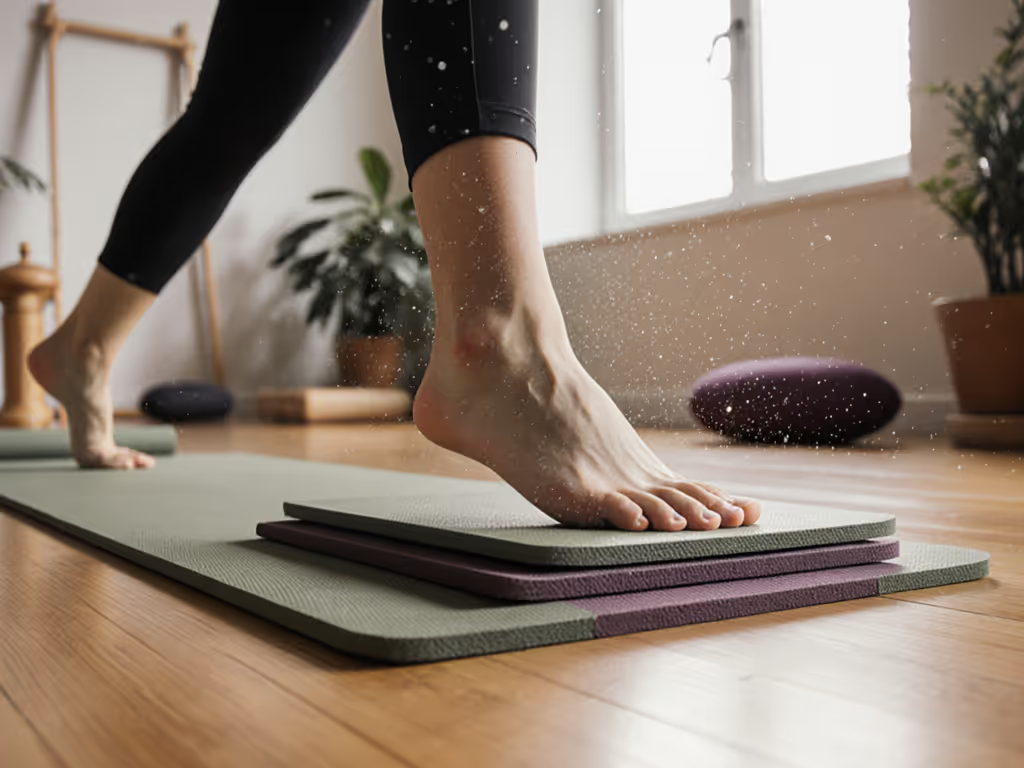
This isn't just opinion: it's what the pressure mapping data shows across multiple mat materials. A 6mm mat under 200lbs of pressure compresses to approximately the same effective thickness as a 5mm mat under 150lbs.
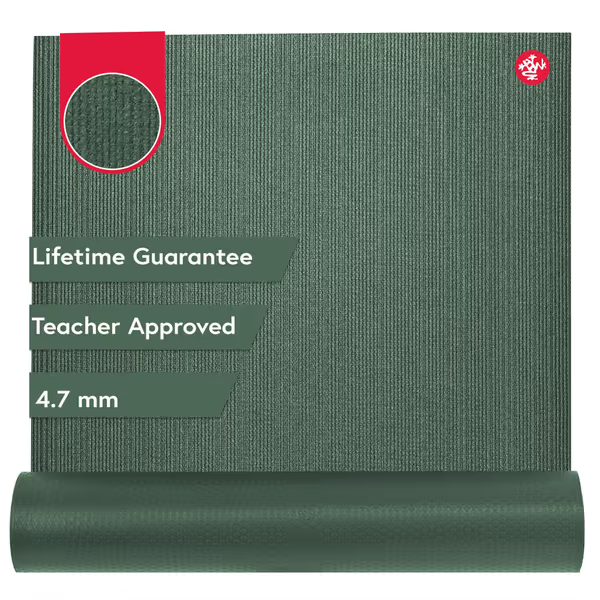
Manduka PROlite Yoga Mat
Lifetime durability, superior joint protection, and hygienic for all yoga styles.
$98.37
Thickness4.7mm
Thickness4.7mm
Pros
Expert-recommended for superior support and stability.
Ultra-dense cushioning protects joints on any surface.
Hygienic, closed-cell material resists moisture absorption.
Cons
Requires break-in period for optimal grip.
Specific cleaning solutions recommended to maintain mat.
Customers find this yoga mat to be beautifully made, with good cushioning that provides adequate padding on hard surfaces and balances firmness with comfort. They appreciate its lightweight design that stays in place on the floor, and consider it worth the price. The slipperiness receives mixed feedback - while some find it extremely grippy, others say it's not slippery at all. The mat's durability shows no signs of wear over time.
Customers find this yoga mat to be beautifully made, with good cushioning that provides adequate padding on hard surfaces and balances firmness with comfort. They appreciate its lightweight design that stays in place on the floor, and consider it worth the price. The slipperiness receives mixed feedback - while some find it extremely grippy, others say it's not slippery at all. The mat's durability shows no signs of wear over time.
FAQ: Thick Mats & Weight Considerations
Q: I'm heavier (over 180lbs) and struggle with knee pain on standard mats. What thickness should I choose?
A: For taller, larger-bodied practitioners, optimal mat thickness by weight shifts toward the thicker end of the spectrum. At 6mm thick, you get the necessary cushioning that prevents bottoming out on hardwood or tile floors. The Manduka PROlite (4.7mm) works well for many medium-weight practitioners, but heavier yogis often report needing that extra millimeter of cushion. Look for high-density construction that maintains stability while providing joint protection (natural rubber and high-quality PU materials excel here because they resist permanent compression).
Q: I'm petite (under 130lbs) but want cushion for restorative yoga. Won't a thick mat make balancing poses unstable?
A: You've identified the core trade-off! For lighter practitioners, a thick mat can feel overly soft during standing balances. Your solution? Target 5mm thickness, the sweet spot that provides cushion for seated poses without compromising stability. Many smaller yogis I've worked with find that high-density 5mm mats deliver the “just-right” firmness that doesn't wobble underfoot. Material choice matters too: natural rubber offers more responsive compression than softer TPEs.
Q: Does mat thickness interact with flooring surface?
A: Absolutely. This is where many guides fall short, because they don't consider your actual practice environment. On hardwood or tile, thicker mats (5-6mm) provide necessary cushion. On low-pile carpet, you might prefer 4-5mm to maintain stability (thicker mats can sink unevenly into carpet fibers). On thick carpet, consider going thinner (3-4mm) to prevent wobble.
I once tested mats on a studio's new bamboo flooring that felt rock solid until a 200lb practitioner sank slightly into chair pose, and the slight give compromised his balance. We switched to a 5.5mm mat with higher density, and his alignment improved immediately. Your flooring matters as much as your body weight! Get floor-specific tips in our mat-floor compatibility guide.
Q: How does thickness affect portability for travel?
A: This is where the lightweight yoga mat for travel discussion gets nuanced. Yes, thinner mats (3-4mm) roll smaller and weigh less, but consider your actual travel pattern:
- Commuting daily: 4mm mat offers the best balance of portability and durability
- Occasional travel: 5mm mat still rolls reasonably small but performs better overall
- Dedicated home practice: 6mm provides maximum cushion without portability concerns
The JadeYoga Travel Mat weighs just 3 pounds at 1/8" thick, perfect for my students who take mat sharing seriously but need reliable grip on gym floors. Just remember: thinner travel mats often sacrifice cushion and durability for portability. If you're heavier, even a "standard" travel mat might compress too much during use. Frequent flyers can compare options in our lightweight travel mat roundup.
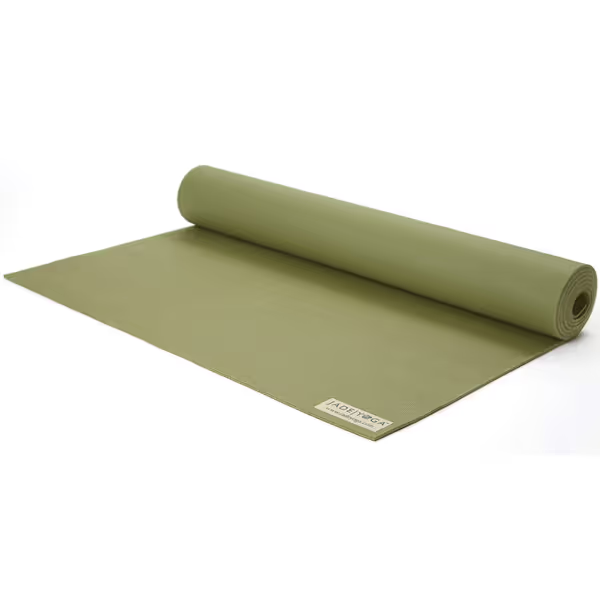
JadeYoga Travel Yoga Mat
Portable, non-slip travel mat for confident practice anywhere.
$69.95
Thickness1/8"
Thickness1/8"
Pros
Exceptional non-slip grip, wet or dry
Lightweight and portable for travel
Made from sustainable natural rubber
Cons
Thickness may be too thin for some joints
Initial strong rubber odor
Customers praise the yoga mat's slip resistance, with hands not slipping at all and providing perfect grip, while also appreciating its light weight and travel-friendly design that easily fits in suitcases.
Customers praise the yoga mat's slip resistance, with hands not slipping at all and providing perfect grip, while also appreciating its light weight and travel-friendly design that easily fits in suitcases.
Q: What's the connection between thickness and grip during sweaty practices?
A: Thickness interacts with material in surprising ways. Thinner mats (3-4mm) often have superior wet grip because:
- Less material compresses under sweaty hands/feet, maintaining surface contact
- Many thin mats use open-cell materials (like natural rubber) that absorb moisture rather than repel it
Thicker mats (6mm) can sometimes feel slippery when wet if they're closed-cell PU, your sweat sits on top rather than being absorbed. However, some premium 6mm mats solve this with textured surfaces or hybrid materials. This is why I emphasize testing mats in conditions matching your actual practice: what works for dry studio yoga fails spectacularly in hot yoga! For sweat-heavy sessions, check our verified non-slip hot yoga mats.
Q: How does thickness impact mat longevity?
A: Counterintuitively, thinner isn't always less durable. Very thick mats (6mm+) made from lower-density materials can compress permanently in high-pressure areas (knees, elbows), creating uneven surfaces. But high-density 5-6mm mats actually outlast thinner ones because they resist compression better under repeated use.
Sustainability with receipts: A mat that lasts 5 years with proper thickness for your body weight creates less waste than replacing three thinner mats that couldn't handle your weight. Durability isn't just about thickness, it is about matching density to your specific needs.
Beyond thickness: The complete picture
Thickness alone doesn't determine performance, it is one factor in a complex equation that includes:
- Material density: How the material responds to compression
- Construction: Open vs. closed cell, single-layer vs. laminated
- Surface texture: Micro-patterns that enhance grip
- Weight distribution: How evenly your body weight presses on the mat
For large yoga mat users (taller practitioners needing extra length), thickness becomes even more critical. Extra-long mats experience more flex in the center, so the 5-6mm range often provides necessary stability. Standard-width mats (24") may feel unstable at 6mm for some practitioners, while large yoga mat dimensions (26"+) distribute weight better, making thicker options viable.
Finding your personal thickness sweet spot
Forget generic "one size fits all" recommendations. Your perfect thickness depends on:
- Your body weight and distribution
- Your primary practice style (fast vs. slow)
- Your flooring surface
- Your joint sensitivity
- Your portability needs
Here's my evidence-based decision tree for determining your optimal mat thickness by weight:
- Start with weight:
- Under 130lbs → lean toward 4-5mm
- 130-180lbs → 5mm is ideal starting point
- Over 180lbs → begin with 5-6mm
- Adjust for practice style:
- Vinyasa/Ashtanga: subtract 0.5mm for better stability
- Restorative/Yin: add 0.5-1mm for cushioning
- Hot yoga: prioritize open-cell materials that work with thickness
- Consider flooring:
- Hard surfaces: add 0.5mm cushion
- Carpet: may require less thickness
- Test in real conditions: Borrow or rent before buying: what feels right in the store may not work during your actual practice
Final thoughts: Thickness in context
Remember that student whose "eco" mat smelled like solvents but had incredible grip? That experience taught me to evaluate mats holistically. The perfect yoga mat for exercise balances thickness with material performance, low-odor properties, and traceable sourcing, all while delivering the stability your practice requires.
Sustainability works when mats perform well enough to stay in use longer. Choose thickness wisely based on your specific needs, not marketing claims, and you'll build a practice platform that supports you for years, not just until the next sale.
Further exploration: Compare VOC emissions data across thickness ranges in our materials database, or join our upcoming webinar on matching mat specifications to your biomechanics.
Related Articles