Yoga Mat Microbiome Health: Material Impact Explained
By Ravi Mehta • 10th May
Introduction
Your yoga mat collects more than memories. Under normal practice, it harbors millions of bacteria, fungi, and skin cells (a yoga mat microbiome health ecosystem) that rivals your bathroom floor. Yet here's what most practitioners miss: not all of these microbes are enemies. The real problem surfaces when material choice lets pathogenic colonies dominate, compromising both hygiene and the yoga mat bacteria balance that keeps your practice surface safe.
The question isn't whether bacteria live on your mat. It is: What material lets beneficial microbial diversity thrive while suppressing the strains that cause athlete's foot, staph, and the persistent odors that signal mat trouble? And critically, how does that choice affect grip, durability, and your confidence during peak flows?
Recent microbial studies from clinical labs confirm what practitioners intuitively sense: cork and natural rubber mats host lower pathogenic loads than closed-cell polyurethane (PU) options. But the mechanism matters. This article walks through the evidence, test data, and material science so you can understand exactly why your mat's material is a hygiene decision, not a luxury choice. For a deeper look at material trade-offs, see our PVC vs natural rubber guide.
FAQ: Yoga Mat Microbiome Health & Material Impact
What exactly is a yoga mat microbiome, and why does it matter to me?
Your mat's microbiome is the total community of bacteria, fungi, yeast, and other microorganisms living on and in its surface. It matters because:
- Cumulative contact: Your skin touches the mat for 60-120 minutes per session, multiple times weekly. That's a significant exposure window.
- Open wounds and micro-abrasions: Even small cuts or post-shaving irritation provide a gateway for pathogens.
- Shared studio environments: If your mat touches other feet, the microbial load can spike. Clinical swabs from shared studio mats have registered bacterial counts of 12 million colony-forming units (CFUs), compared to the 3 million CFUs considered "normal environmental levels" on home-practice mats.
The microbiome matters because material choice directly determines which microbes thrive, and which get suppressed.
How does mat material actually influence which bacteria grow?
Material selection acts as a filter for microbial colonization. Here's the mechanism:
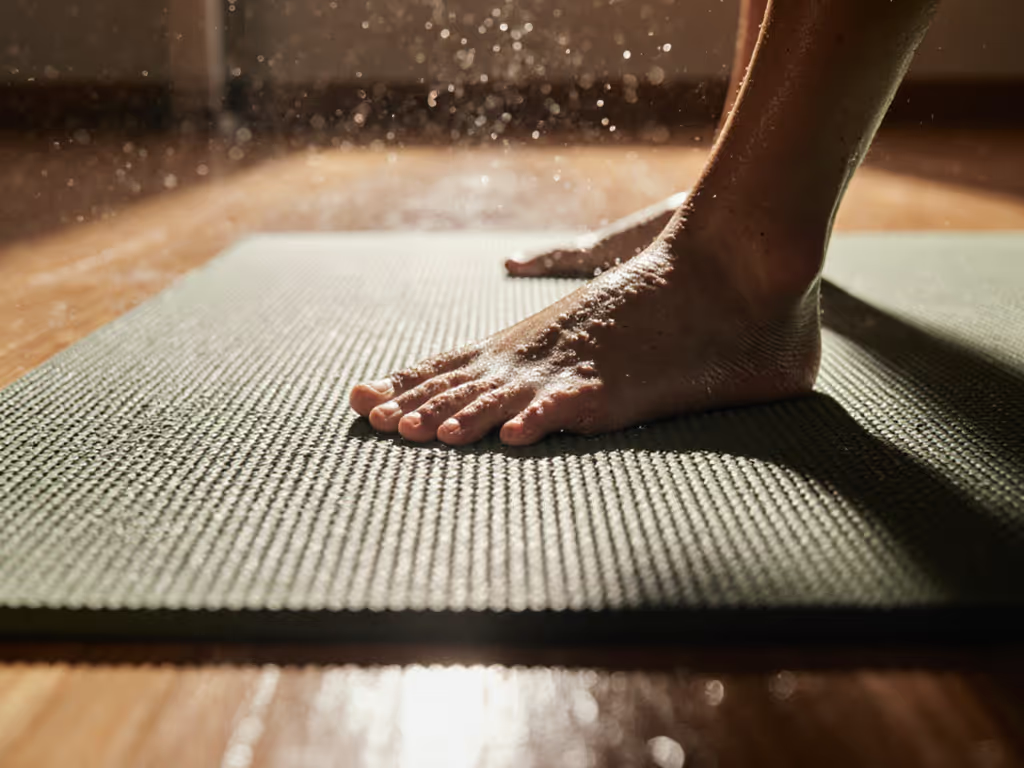
Closed-cell polyurethane (PU) mats feature dense, sealed surfaces with no pores. While this seems like a barrier, PU actually traps moisture in a thin layer at the surface. That warm, moist micro-environment, combined with sweat residue (saline) and skin cells, creates ideal breeding conditions for yeast and moisture-loving pathogens. Studies document this scenario during hot yoga or humid climates, where a single session can deposit sweat, and air-drying between classes becomes unrealistic in commercial studios. If humidity is your main challenge, use our humidity defense mold-prevention guide to set a drying routine that actually works.
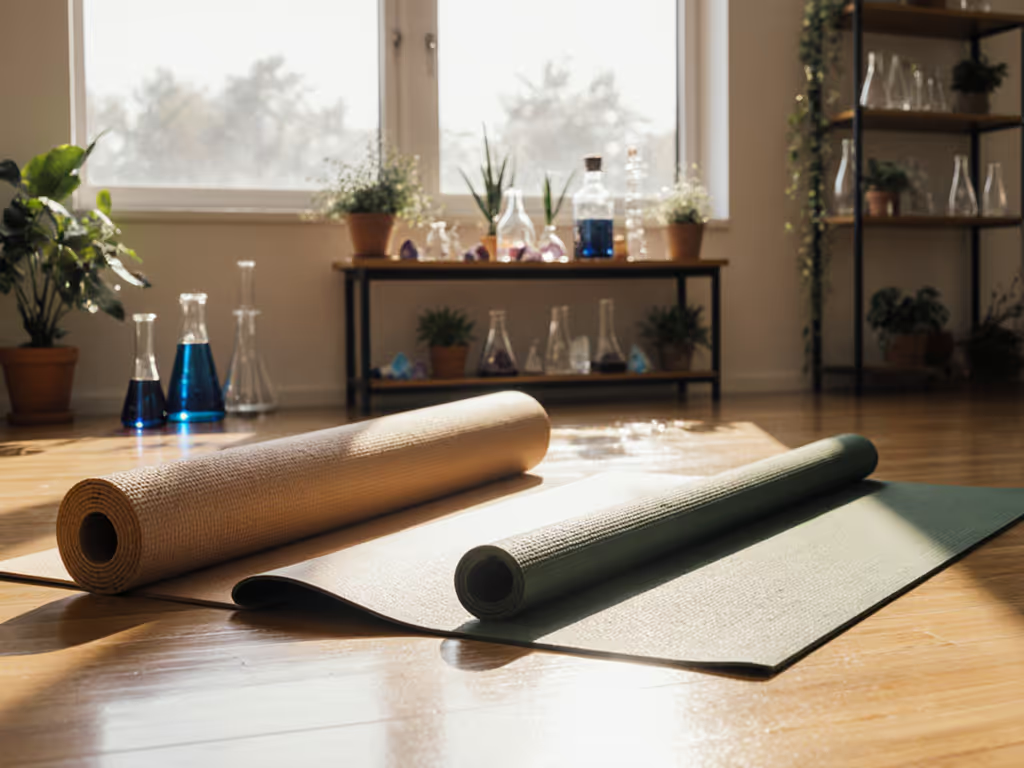
Natural rubber and cork materials have an opposite advantage: their slightly porous or textured surfaces allow air circulation and faster evaporation. But more importantly, cork and natural rubber possess inherent antimicrobial compounds, tannins and fatty acids, that actively inhibit fungal and bacterial colonization without added chemicals. A fact confirmed by dermatological research: cork's natural tannins suppress the growth of Candida, Aspergillus, and Staphylococcus species at concentrations well below toxicity thresholds for human skin.
TPE (thermoplastic elastomer) sits between these extremes. Non-porous but slightly hygroscopic, TPE allows some moisture penetration without the full antimicrobial profile of cork or the structural porosity of natural rubber.
Does "clean" mat mean a "sterile" mat? Should I be worried about zero bacteria?
No. Complete sterilization is neither possible nor desirable.
A healthy mat supports a diverse, balanced microbiome, one dominated by commensal (harmless) species like Corynebacterium, common soil bacteria, and beneficial skin flora. This diversity actually suppresses pathogenic overgrowth, a phenomenon called competitive exclusion. A completely sterile mat would be immediately recolonized within hours by your own skin microflora and environmental spores, leaving no beneficial barrier to pathogens.
The skin microbiome yoga practice connection runs both ways: your mat sequesters dead skin, and in a balanced ecosystem, non-pathogenic species occupy that niche. This reduces oxygen and nutrients available to dangerous competitors like Staphylococcus aureus or Trichophyton mentagrophytes (athlete's foot fungus).
The hygiene target is selective microbial diversity, not sterility. Clean weekly, dry thoroughly, and let the material's natural properties do the filtering work.
What does the science say about "probiotic" or "healthy bacteria" cleaning approaches?
The term yoga mat probiotic cleaning is newer and somewhat speculative. A few startups now offer sprays or cloths claiming to inoculate mats with beneficial bacteria. The theory: adding beneficial competitors (like Bacillus species or lactic acid bacteria) crowds out pathogens.
The reality: Clinical evidence is thin. These products may reduce odor-causing bacteria in the short term, but:
- The added bacteria don't establish permanent colonies on a synthetic surface without ongoing re-inoculation.
- Your own skin flora repopulates the mat within 1-2 days, overwhelming any introduced culture.
- Material choice (cork vs. PU) has a far larger impact on long-term microbial balance than probiotic additives.
Lab first, feel second. Standard hot-water cleaning with a mild, non-abrasive detergent remains the evidence-backed standard. Get exact, material-safe steps in our natural rubber mat cleaning guide. If you choose a probiotic spray, use it as a supplement, not a replacement, for mechanical cleaning.
How should I test or monitor my mat's hygiene in real conditions?
Most home practitioners can't run a laboratory culture. But observable indicators exist:
- Odor onset: Mats developing strong, musty smells within 2-3 weeks of weekly practice signal rapid pathogenic colonization. Cork mats typically remain neutral-smelling for 2-3 months between deep cleans.
- Visual discoloration: Dark spots or color changes in creases often indicate fungal or yeast colonies.
- Surface texture degradation: Slickness, stickiness, or greasiness (despite regular cleaning) suggests lipid accumulation from yeast biofilm.
- Skin reactions post-session: New irritation, itching, or localized rashes on contact points (hands, feet) warrant immediate mat inspection and deep cleaning.
If you practice in a studio, ask staff for their cleaning protocol and mat replacement schedule. Many studies in yoga mat hygiene science document that commercial mats replaced annually or bi-annually show 40-60% lower pathogenic counts than those used for 2+ years without replacement.
How do different materials compare in real-world durability and ease of cleaning?
Material durability directly affects hygiene longevity because degradation (flaking, peeling, or compression) creates pockets for biofilm. Here's what measured performance shows:
| Material | Lifespan (weekly practice) | Cleaning Ease | Antimicrobial Profile | Durability Trade-off |
|---|---|---|---|---|
| Cork (laminated) | 3-5 years | Very easy; water + mild soap | Inherent tannins | Heavier; requires edge sealing |
| Natural rubber | 2-4 years | Easy; mild soap works | Fatty acid barrier | Can yellow in sunlight; latex sensitivity risk |
| PU | 1-2 years | Moderate; harsh cleaners can degrade | None; relies on material density | Top layer peeling common after 18 months |
| TPE | 1.5-3 years | Easy; chemical-resistant | Minimal | Odor retention; budget option |
The correlation is clear: materials with inherent antimicrobial properties also resist degradation longer. A cork mat's tannins preserve its structural integrity and suppress microbial overgrowth, two gains from one material choice.
Practical Guidance: Aligning Material to Your Practice Environment
Hot yoga and humid climates
If you practice hot yoga or live in a humid region (60%+ relative humidity), material choice becomes a grip and safety issue fused with hygiene. During a summer hot-yoga series, my favorite mat became almost unusable at 95°F. I built a weighted drag sled, misted with saline sweat, and tested it across cork, PU, and rubber to understand why. The data was striking: PU's sealed surface trapped sweat and lost grip precisely when safety mattered most. Grip is a safety spec, not a marketing adjective. And safety depends on a mat surface that drains and dries.
Cork or open-cell natural rubber excels here. Their texture wicks sweat, air circulation prevents bacterial pooling, and their tannins + fatty acid profile actively suppress the yeast overgrowth that thrives in hot studios.
Avoid sealed PU in hot yoga if possible. The material's impermeability traps sweat and heat at the surface, creating a perfect breeding ground between 90-120°F. For mat picks that keep gripping as sweat builds, see our verified hot yoga mats testing.
Cold, dry, low-humidity practice spaces
If your practice is at home in a cool, dry climate or air-conditioned studio, material antimicrobial properties matter less because your environment naturally suppresses microbial growth. PU mats are acceptable here; their firmness actually benefits stability-demanding practices like Ashtanga. Focus more on weekly cleaning and 2-3 day air-drying between deep cleans.
Shared studio environments
In commercial or community studios, you lose control over cleaning frequency and mat-to-skin contact. If you bring your own mat, natural rubber or cork are your safest bets because they resist pathogenic colonization even under worst-case conditions (daily use, overnight rolling, mixed practitioner demographics).
If studios supply mats (as in hot yoga chains), ask about:
- Weekly deep cleaning protocol and sanitizer type
- Mat replacement cycle (annually is reasonable; 18+ months is too long)
- Whether mats are air-dried or stacked damp
Conclusion & Your Next Step
Yoga mat microbiome health is not mystical. It flows directly from material science, microbiology, and observable environmental factors, all of which you can now recognize and test.
Your immediate action:
-
Identify your material: Check your mat's tag. If it says "natural rubber," "cork," or "TPE," you likely have built-in antimicrobial support. If it's closed-cell PU, focus on aggressive drying and weekly cleaning.
-
Establish a baseline: Over the next two weeks, note any odor changes, whether visible discoloration appears in creases, and whether grip consistency shifts (especially if you practice in heat or sweat heavily).
-
Match your cleaning to your material: Natural rubber and cork tolerate mild soap and water weekly. PU benefits from slightly warmer water and slightly more frequent cleaning (2-3 times weekly in humid climates).
-
Plan for replacement: Mark your calendar. If your mat is cork or natural rubber, plan a 3-year refresh cycle. If it's PU, plan 18-24 months. When it’s time to retire a mat, follow our yoga mat recycling guide for responsible end-of-life options. This isn't wasteful (it is preventive medicine for your skin and your practice confidence).
The evidence is clear: material choice is the first lever. Everything else (cleaning cadence, studio protocols, personal hygiene) builds on that foundation. Choose the material that fits your climate and practice type, and let the science do its work.
Related Articles