Cultural Significance of Yoga Mats Explained
By Mina Okafor • 8th Dec
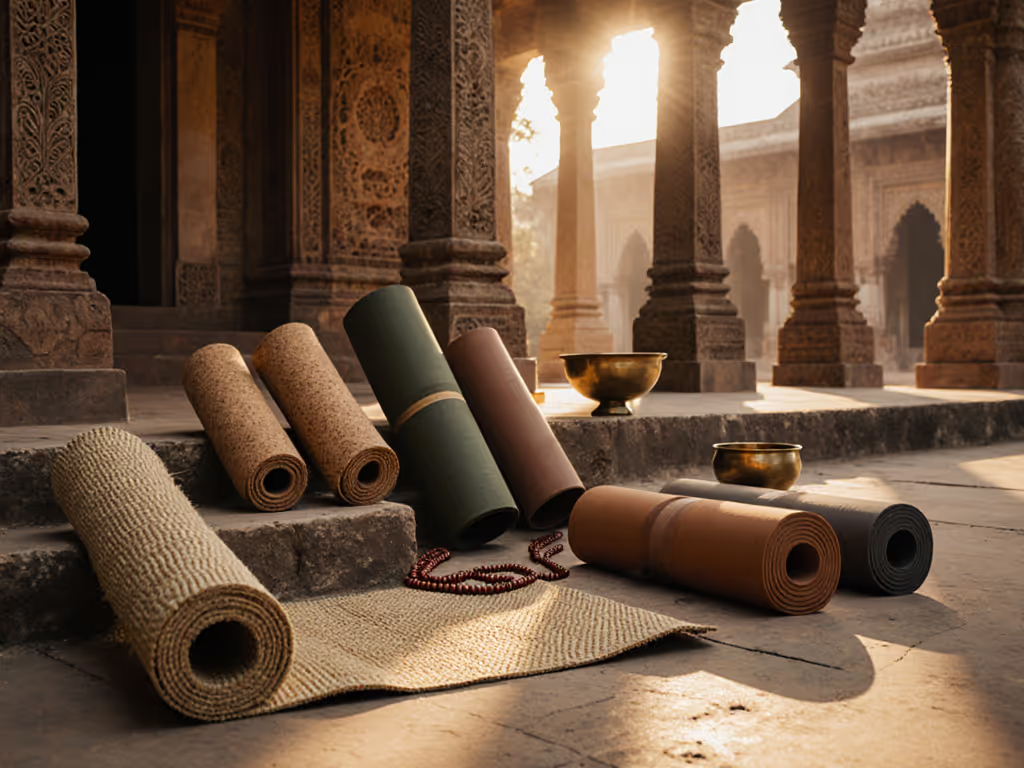
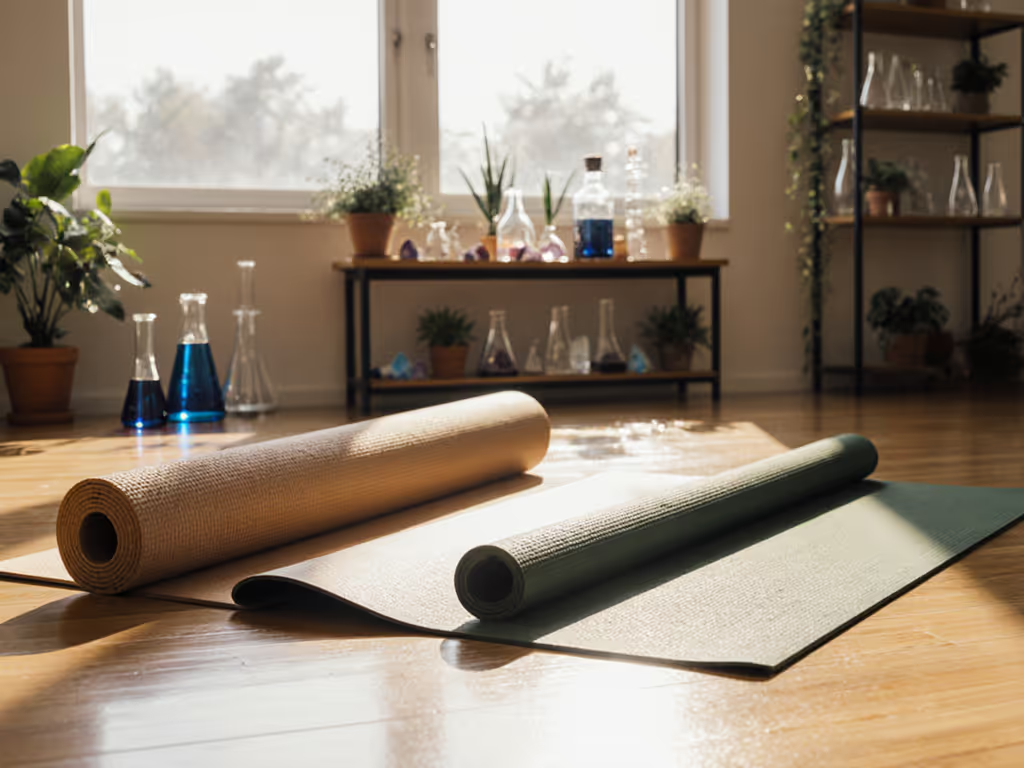
When considering the profound yoga mat cultural significance, we're examining far more than a simple exercise accessory. This unassuming rectangle represents thousands of years of spiritual evolution, cross-cultural adaptation, and the delicate balance between connection to earth and bodily comfort. From ancient grass mats to today's high-performance surfaces, each iteration reflects humanity's evolving relationship with movement, mindfulness, and the spaces where we practice. For a deeper timeline of how mats evolved, explore the evolution of yoga mats. Understanding this journey helps us make smarter choices about safe yoga mats that serve both our bodies and our practice today.
Ancient Foundations: More Than Just a Surface
Long before modern sticky mats appeared in studios, yogis practiced meditation and asanas on minimally processed natural materials. Historical texts like the Bhagavad Gita (circa 2nd-3rd century CE) specifically recommended sitting on a "steady seat" covered with kusha grass, deer skin, or cloth. These weren't comfort choices. They carried deep symbolic meaning. The grass connected practitioners to earth's energy, while the animal skin (always tanned but not from killed animals) represented spiritual purity and the shedding of ego.
This early yoga mat symbolism reveals yoga's original purpose: not physical exercise, but a spiritual technology. The surface choice was integral to the practice's effectiveness. As described in the Shvetashvatara Upanishad, these materials helped maintain "steadiness" (sthairyam) during meditation, a concept that still guides modern mat development. The anthropology of these choices shows how environmental context shaped spiritual practice, with desert regions favoring thicker leather, while forest communities used layered grasses.
The Cross-Cultural Mat Practices That Shaped Modern Yoga
As yoga traveled beyond India in the early 20th century, mat practices evolved dramatically. When Westerners encountered yoga, they brought different environmental needs: wood floors replacing earth, carpeted studios replacing temple courtyards. To optimize stability and safety on your surface, consult our yoga mat floor compatibility guide. By the 1960s, practitioners were using ordinary towels that slipped dangerously during poses. This functional problem carried cultural weight: the unstable surface undermined the very steadiness ancient texts prescribed.
The pivotal moment came in 1982 when Angela Farmer, teaching in Germany, discovered carpet underlay provided the grip contemporary practitioners needed. This simple innovation (repurposing industrial materials for spiritual practice) represents the essence of cross-cultural mat practices. What began as a practical solution transformed into the "sticky mat" revolution, making yoga accessible to millions who couldn't find stability on Western surfaces.
My first apartment had tile floors that punished every lunge. I cycled through plush mats that felt great on knees but wobbly in standing poses. After testing density, rebound, and carpet-slippage, I learned a firmer base with a thin topper beats any single thick mat for balanced comfort.
Modern Mat Anthropology: What Your Choice Reveals
Today's yoga mat market reflects complex cultural currents. The $10 billion industry offers materials ranging from natural rubber (honoring ancient earth-connection) to ultra-thin travel mats (serving global nomads). Each choice tells a story about our values:
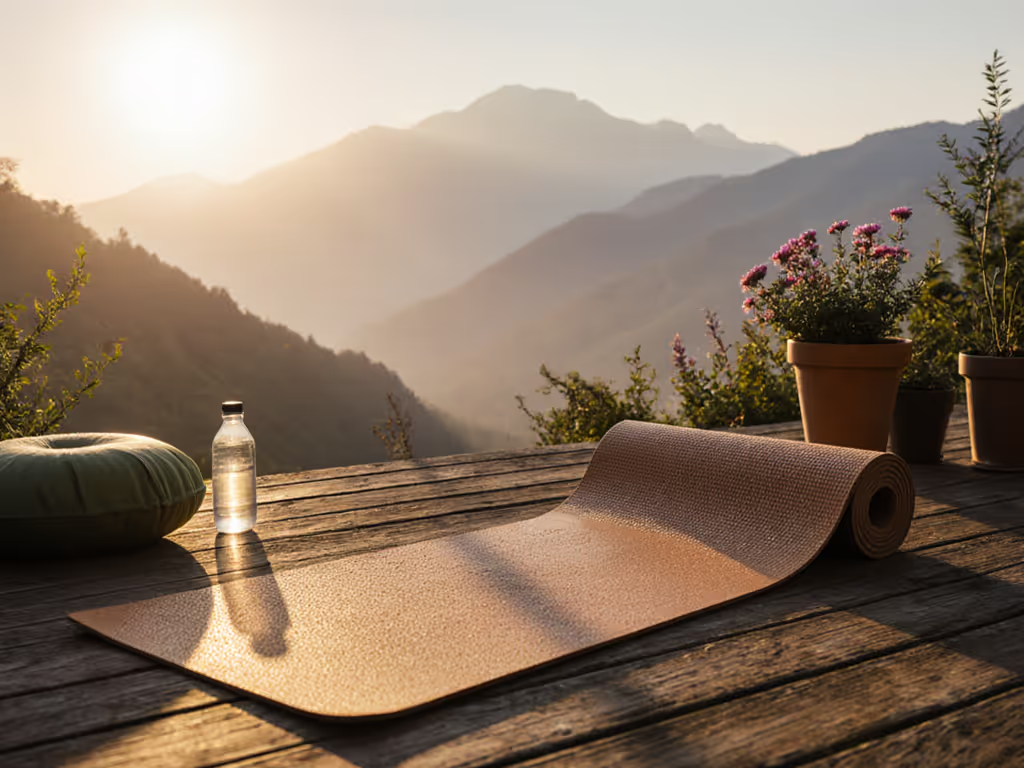
- Cork mats represent sustainability consciousness while mimicking the grip of traditional leather
- Printed designs echo ancient Indian rangoli patterns, bringing artistic ritual into practice
- Alignment lines modernize the guru's physical adjustments with visual guidance
This evolution demonstrates how yoga mat anthropology captures broader societal shifts: from spiritual tool to self-care accessory, from communal resource to personal expression. The increasing focus on non-toxic materials mirrors wider environmental awareness, while varied thickness options acknowledge diverse body needs previously unaddressed in traditional practice. To avoid marketing claims and choose truly safe materials, learn how to spot real eco-friendly workout mats.
Practical Wisdom: Applying Historical Insight to Today's Practice
Understanding yoga mat history isn't academic. It solves modern problems. When your hands slip in downward dog during hot yoga, you're experiencing the same environmental disconnect that challenged early Western practitioners. Let's apply yoga mat symbolism to practical solutions:
Step 1: Match Your Mat to Your Floor Environment
| Floor Type | Traditional Mat Equivalent | Modern Solution |
|---|---|---|
| Hardwood | Bare earth | Medium-firm recycled rubber (3-4mm) with micro-texture |
| Tile | Stone temple floors | Closed-cell foam with moisture-wicking surface |
| Carpet | Grass/matte layers | Extra-thick mat with carpet-gripping bottom layer |
Step 2: Consider Your Practice's Intention
- Meditation focus: Thinner mats (2-3mm) maintain earth connection
- Dynamic flow: Medium thickness (4-5mm) balances cushion and stability
- Joint sensitivity: Layered approach (firm base + removable top)
Comfort is engineered: density, thickness, and floor work together.
Step 3: Evaluate Material Meaning
Natural rubber mats aren't just "eco-friendly." For a data-backed breakdown, see our PVC vs natural rubber guide. They reconnect us to yoga's earth-based origins while providing the grip modern practitioners need. This duality matters to those seeking safe yoga mats that honor tradition while functioning in contemporary spaces.
Tuning Your Practice Through Mat Intelligence
The journey from kusha grass to high-performance mats reveals yoga's adaptive nature. Each innovation responded to real practitioners' needs while preserving core principles. As you choose your mat, consider it not just equipment, but a bridge between ancient wisdom and modern practice.
Tune the dials: cushion, density, feel.
Start by unrolling three different thicknesses on your actual practice surface. For detailed trade-offs by measurement, read our yoga mat thickness guide. Notice:
- How your wrists feel in plank
- Whether your feet slide in warrior poses
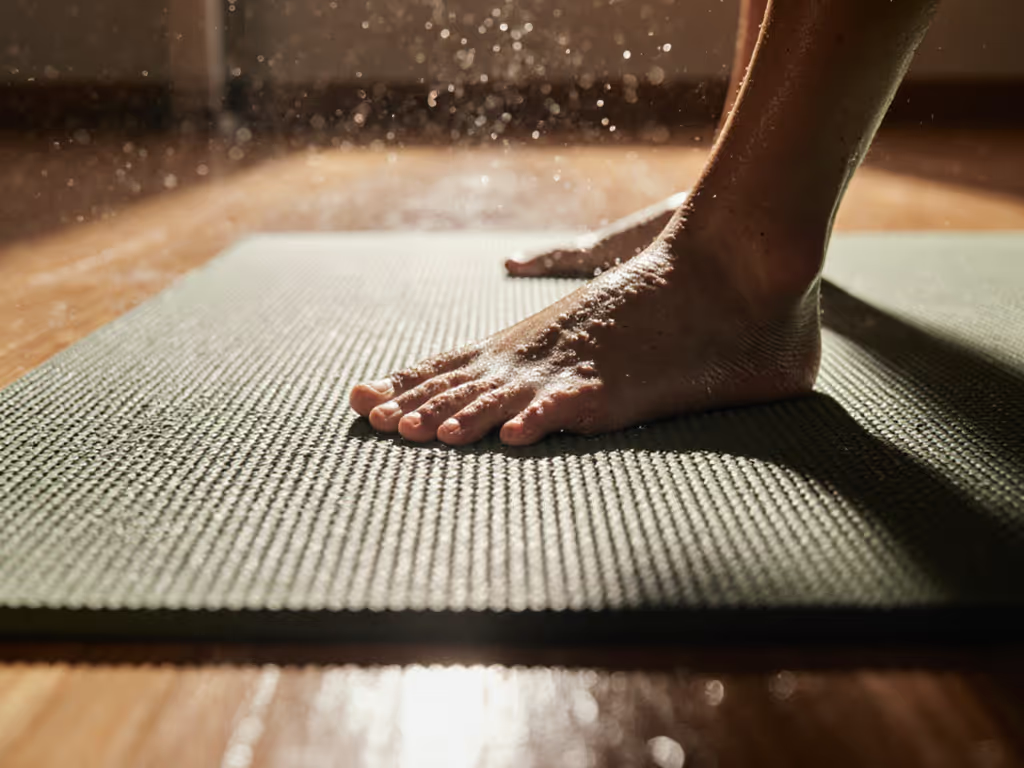
- How the mat responds to moisture (spritz with water)
- The sound of transitions on your floor
This simple ritual connects you to generations of practitioners who've considered these same variables. You're not just choosing a product. You're participating in yoga's ongoing cultural evolution.
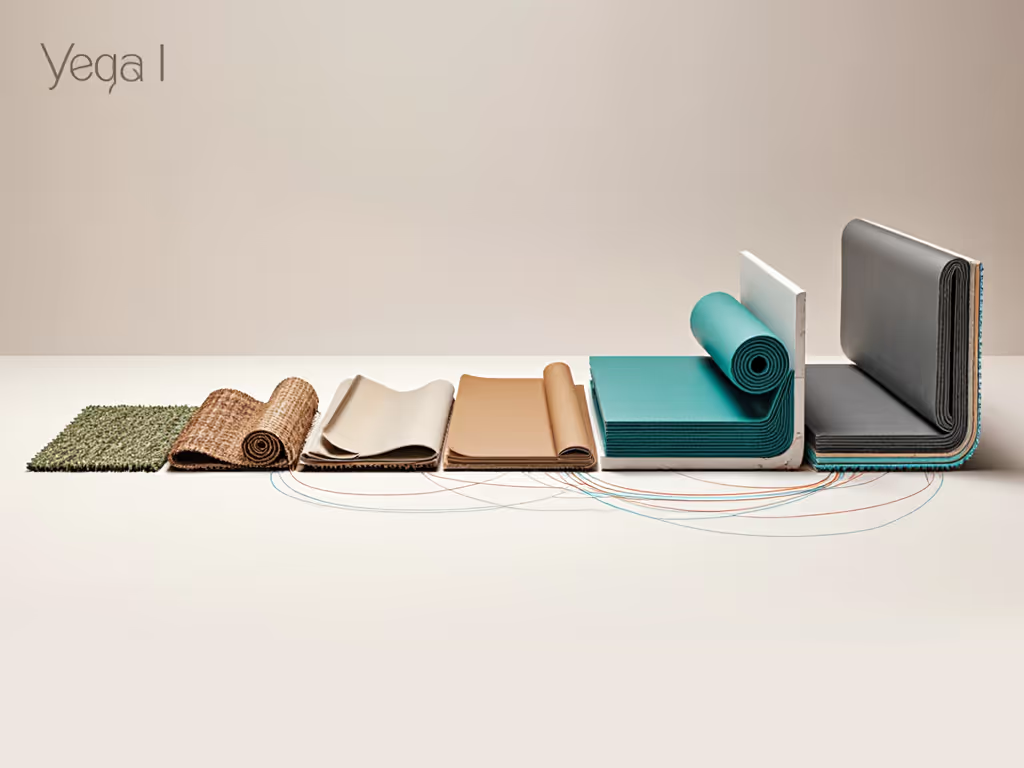
For your next practice, try this actionable step: Place your current mat beside a folded towel of equivalent thickness. Move through your usual sequence on both surfaces. Notice where stability shifts occur. That awareness reveals exactly how to tune your mat setup for your unique body and space. This small experiment honors yoga's historical emphasis on personal observation while solving contemporary problems like slipping or joint discomfort.
When you understand the yoga mat cultural significance, you transform a simple purchase into a conscious choice that connects you to yoga's rich lineage while meeting your present needs. The mat beneath you holds thousands of years of wisdom. Now it's time to make that wisdom work for your practice today.
Related Articles